Start with the alignment checks listed in your vehicle’s service schedule: the maintenance instructions for its model and year. A visual tyre inspection is not the same as measuring wheel angles, and neither means an adjustment is automatically due. Road use matters, but there is no single kilometre interval that fits every car.
Whether you drive a family car or a work ute, the price depends on the work needed. Published Australian prices provide a guide; they do not replace a quote for your car.
How often should you get a wheel alignment?
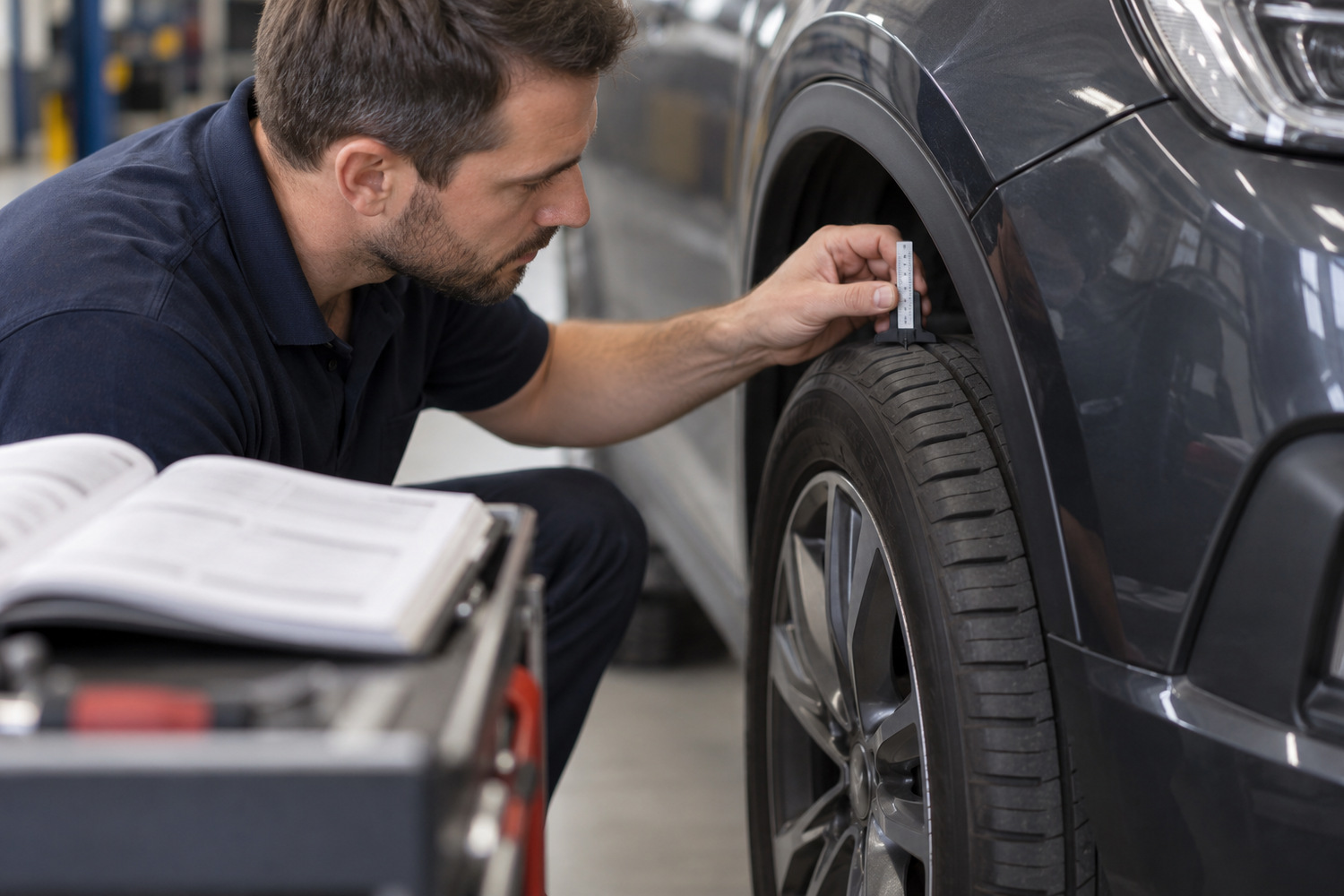
Look for the alignment entry in your own service schedule, including what the check involves. Two Mitsubishi schedules show why a general recommendation cannot stand in for the vehicle’s instructions:
These model-year examples are not rules for every Mitsubishi or other makes. Use your own vehicle’s schedule, rather than borrowing the interval from a similar car.
- The 26MY MV Triton schedule lists services at 15,000 km or 12 months and marks the alignment check at every second service: 30,000 km or 24 months.
- The Mirage MY16 schedule marks its check at every service, but describes it as a visual inspection for tyre wear. That is a different check from measuring the angles.
An alignment measurement compares the wheel angles with the manufacturer’s specifications. Camber, toe and caster are the names you may see on the report. An adjustment is a further step when the measurements and the vehicle’s design call for it.
A service invoice that says the tyres were checked does not necessarily record an alignment measurement. Ask which check is included when arranging the service. If you have lost the logbook, have the applicable schedule identified rather than assuming that every service needs a paid alignment.
The schedule is the starting point for a car that seems to drive normally. It records when to inspect; the inspection establishes whether further measurement or adjustment is needed. A date in the logbook is not an instruction to change settings that have not been checked.
How often should a car on gravel roads be checked?
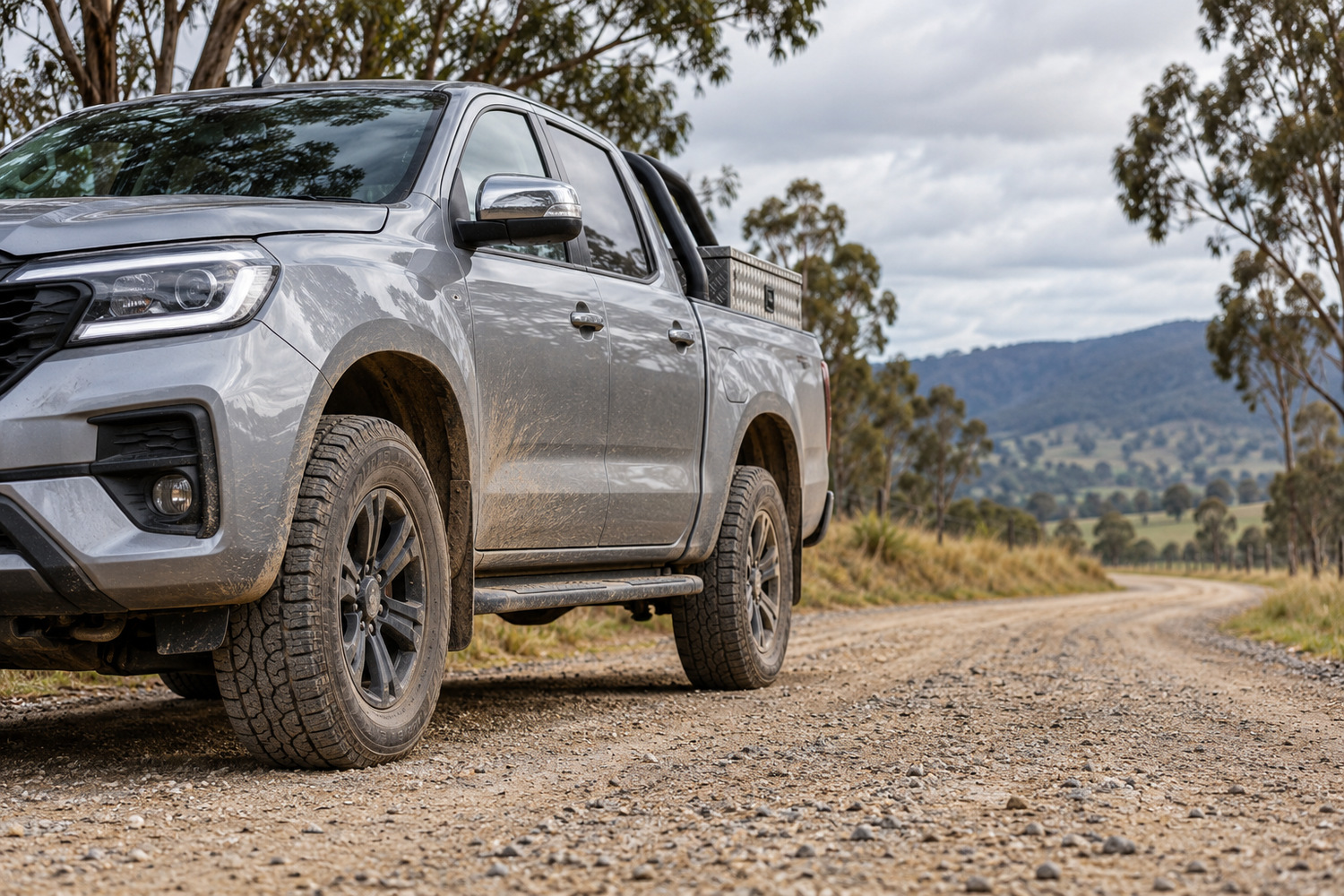
Tell the workshop about regular gravel-road use when discussing the next check. Isuzu’s owner guidance identifies road surfaces, the type of driving and front-mounted accessories as factors affecting alignment. It does not give a shorter interval that every vehicle on gravel must follow.
The Triton schedule also lists rough roads, dusty conditions, hilly areas and excessive load among severe operating conditions. Some service items have extra requirements under those conditions. Its alignment row, however, gives no separate severe-use interval.
An earlier oil or filter service does not automatically bring an alignment adjustment forward. Gravel use is a reason to discuss inspection, not proof that the settings need changing. The workshop needs the vehicle’s schedule and an account of its use to advise on inspection.
For a working vehicle in the Latrobe Valley, that discussion belongs alongside what a work ute service should check. Explain whether gravel access roads are an occasional detour or part of the daily run, and whether the vehicle carries a regular working load. The recommendation should reflect that use, rather than the workshop assuming every country car does the same work.
If the car’s behaviour or tyre wear has changed, arrange an inspection rather than waiting for a routine date. Read why your tyres are wearing unevenly if a wear problem prompted the question.
How much does a wheel alignment cost in Australia?

AutoGuru’s published Australian guide, checked on 21 October 2026, puts an alignment at around $70 for a smaller vehicle and up to $120 for a larger one, with 4WDs and SUVs a little more. These are indicative figures from a booking service, not prices quoted by this workshop or limits on what an individual job may cost.
A quoted price is easier to assess when its inclusions are clear:
- Vehicle and procedure: confirm that the quote applies to your make, model and year, and to the alignment procedure it needs.
- Measurement and adjustment: ask what is measured and which adjustments are included, rather than assuming that a check and an alignment describe the same work.
- Additional work: establish how any required repair or extra charge will be explained and authorised before it proceeds.
Front-only and four-wheel work should not be selected just by choosing the cheaper label. The appropriate procedure depends on the vehicle. Nor does four-wheel measurement invariably cost more: a national chain publishes the same starting price for its two-wheel and four-wheel options. Confirm the specified procedure before authorising the work.
Compare the written inclusions, not just the total. A visual inspection and a measured alignment are different jobs; two offers need to describe the same work before their prices can be compared.
An alignment quote also need not include replacing a worn or damaged component. If inspection identifies another job, ask for its purpose and cost separately. That keeps the price of checking or adjusting the angles distinct from a repair needed before the alignment can be completed.
Ask for the before and after readings
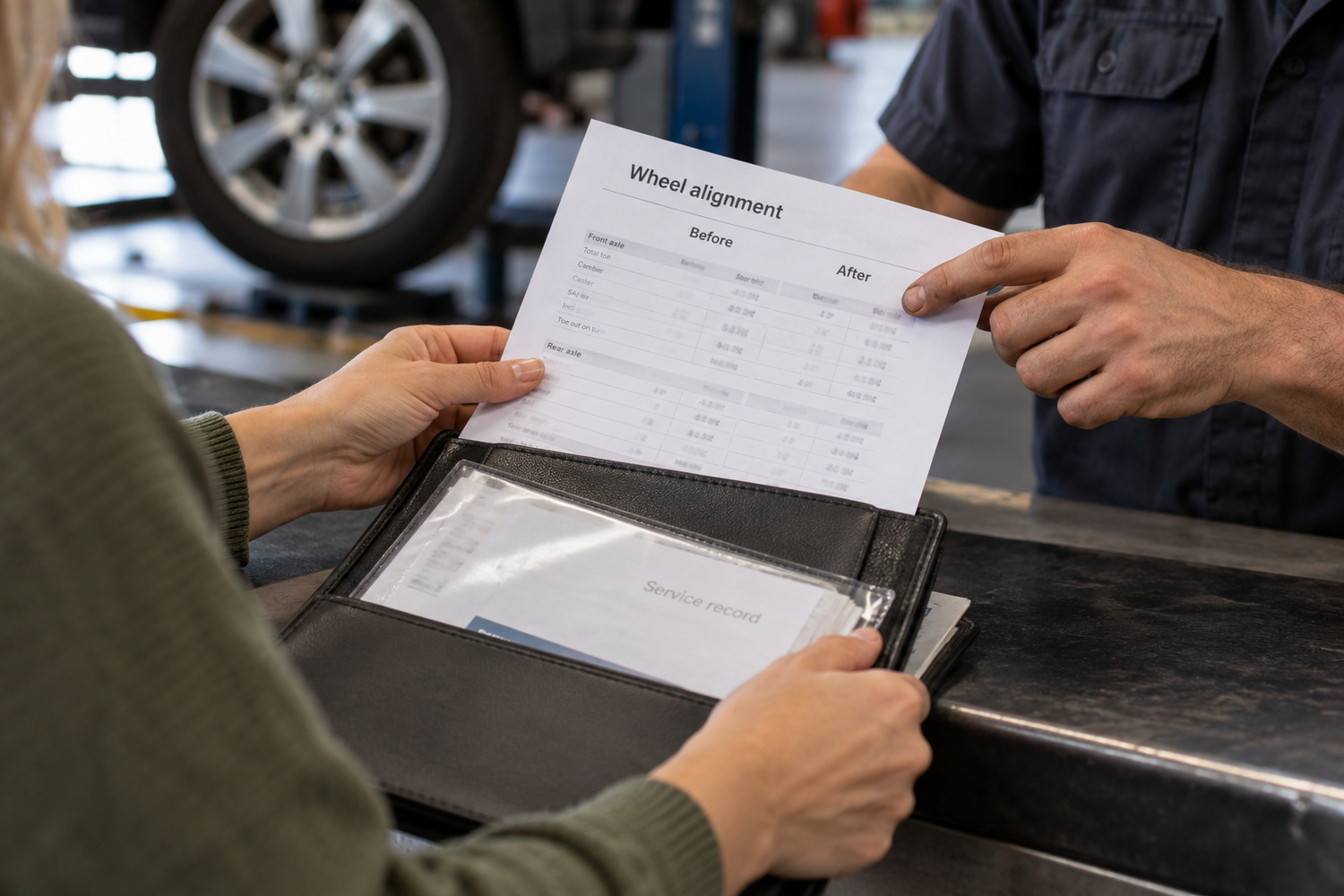
Ask whether the workshop will provide a report showing the measured angles and any adjustments made. Keep it with the service record. It lets you see what was found and gives the workshop something to compare at a later visit.
If a reading remains outside the specified range, ask for an explanation. It does not, on its own, identify a bent or worn part, and not every angle has a factory adjustment. Ask which readings can be adjusted on this vehicle and why any further work is proposed.
If a problem returns, have its cause assessed before paying for another adjustment. Keep the earlier report available, but ask what the new inspection shows.
Frequently asked questions
Do I need a wheel alignment every service?
Not automatically. Check the schedule for your model and distinguish a visual tyre inspection from an alignment measurement. An adjustment should follow the findings and the vehicle’s requirements, rather than being assumed part of every service.
How much does a wheel alignment cost?
AutoGuru’s guide lists about $70 to $120, with some larger vehicles costing more, as checked on 21 October 2026. It is indicative market guidance. Ask for a quote and inclusions for your own car.
Does driving on gravel roads mean more wheel alignments?
It can justify discussing an earlier check. Road surfaces affect alignment, but there is no fixed shorter interval that applies to every car on gravel. Describe your driving to the workshop and follow advice for the vehicle.
Is a wheel alignment worth it if the car drives straight?
It may be worth checking when the applicable schedule calls for it. Straight tracking does not measure wheel angles. A check can establish whether an adjustment is needed; it does not mean one is always required.
Should I get a four wheel alignment or just the front?
Ask which procedure your vehicle requires and what the quote includes. A front-only job is not automatically a suitable budget alternative, and a four-wheel option does not invariably have a higher starting price.
Book it with the next service
Discuss the applicable check when arranging your next service, including any regular gravel-road use. Book a wheel alignment with Lloyd St Automotive in Moe.