Your ute has spent the last fortnight on gravel farm tracks, then towed a loaded trailer up into the hills behind Trafalgar and back. Now it's due for a service. A ute worked like that around Gippsland does not wear the same way as one running sealed roads around Pakenham or Officer.
A work ute driven around Gippsland needs the standard logbook service plus extra attention to the parts that regional work wears out faster. That means suspension and steering, brakes, cooling and the gearbox, tyres and wheel alignment, the air and fuel filters, and the battery. Gravel, mud, hills, towing and long distances all load these parts harder than city driving does. The service is the same job. What changes is how soon each part needs checking, and how closely.
This matters most for tradies, farmers, fleet operators and owner-operators, because a ute off the road is a day of work gone. Catching wear early is far cheaper than a roadside failure with a trailer on the
Why a Gippsland work ute wears faster than a city one
A work ute out here does jobs a suburban ute never sees. Unsealed farm, forestry and back roads shake the vehicle far harder than a sealed arterial. Mud and wet hold moisture against metal. Hills and towing keep the engine, brakes and gearbox under load for long stretches. The distances between jobs are longer, so the kilometres pile up between services. Each of those conditions wears a specific part, and each points to a specific thing to check.
Here is how the main Gippsland conditions map to what they wear and what the service looks at.
| What your ute does out here | What it wears | What we check |
|---|---|---|
| Gravel and corrugated roads | Shocks, bushes, ball joints, wheel bearings | Suspension play, leaks, bearing noise |
| Mud, wet and dairy tracks | Brakes, underbody, fittings | Brake wear, corrosion, packed mud |
| Towing and climbing hills | Clutch, gearbox, brakes, cooling | Coolant, transmission fluid, brake condition |
| Long runs, dusty air | Air filter, fuel filter, oil | Filter blockage, oil condition, water in fuel |
| Cold, damp mornings | Battery, glow plugs | Battery charge, starting, connections |
Suspension and steering: what gravel and corrugations wear out
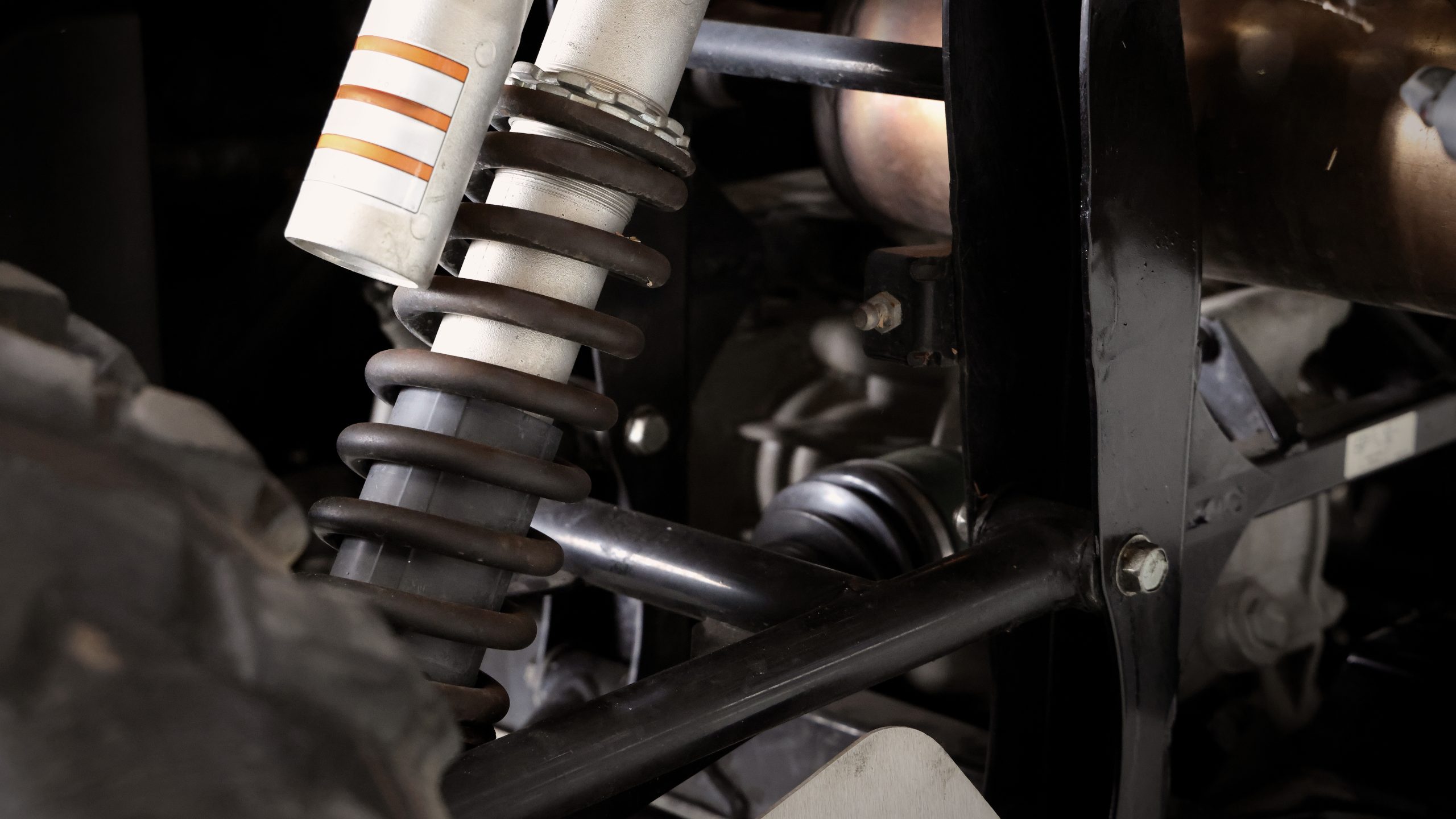
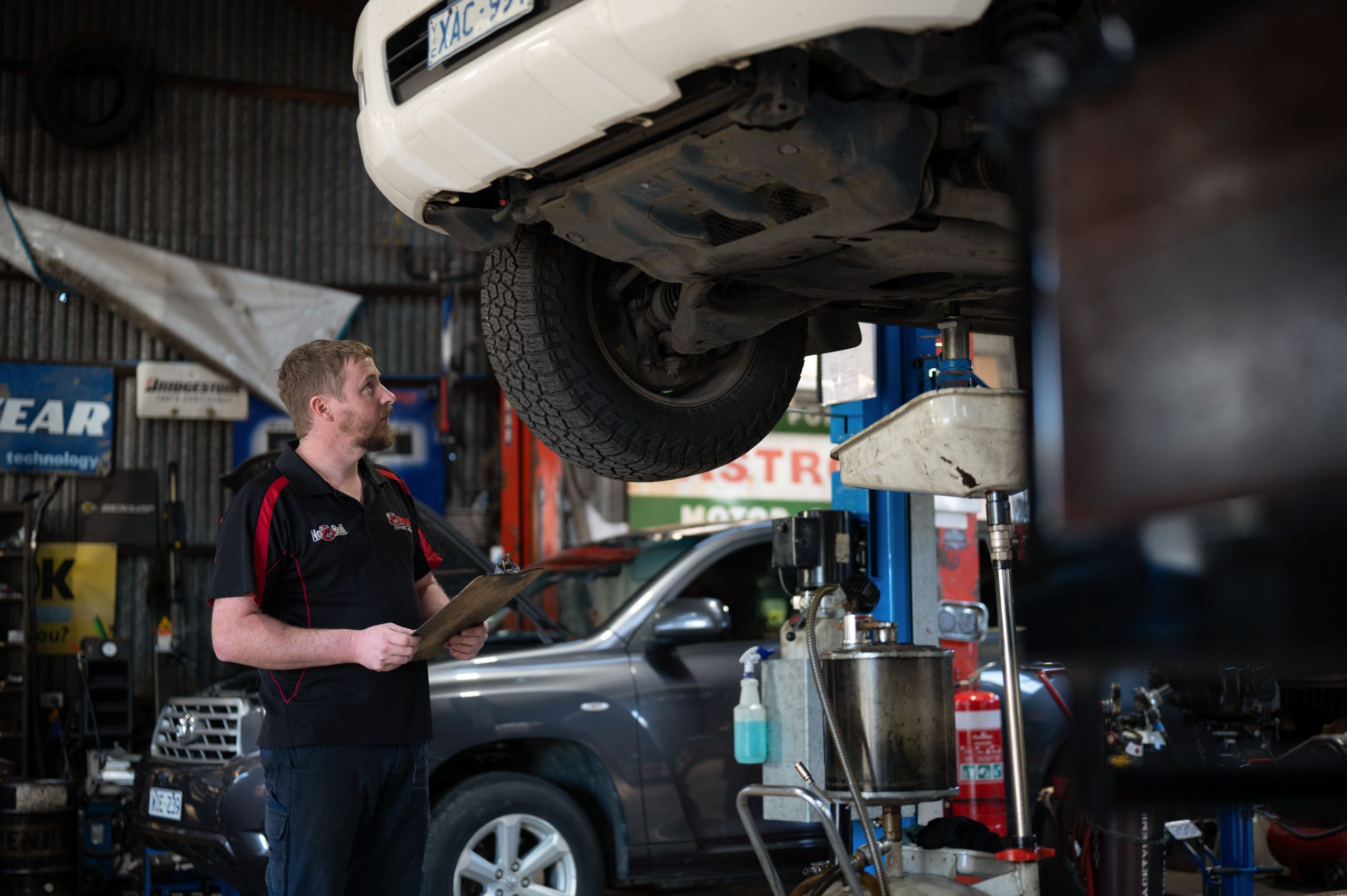
Corrugations are the regular ripples that form across gravel roads. They shake a ute constantly, and that shaking is hard on the suspension and steering. The parts that suffer first are the shock absorbers, the rubber bushes that cushion the joints, the ball joints that let the wheels steer and move, and the wheel bearings. Worn suspension shows up as bouncing, drifting, clunks over bumps, or uneven tyre wear. A good service checks for play in these joints, listens for bearing noise, and looks for leaking shocks. While makers specify a visual check at every service, a deeper inspection and alignment is usually needed by 20,000 km, or much sooner for hard off-road use.
If the ute is sitting low under a permanent load, that is a weight-rating question rather than a service one, and it is worth sorting out properly.
Brakes: mud, hills and heavy loads
Mud packs into brakes and holds grit against the parts. Long descents into the valleys heat the brakes up, and a loaded trailer makes them work harder still. So a work ute's brakes wear faster and need looking at more often than a commuter's. The service checks pad and rotor wear, brake fluid condition, and the state of the lines under all that mud. Brakes are their own job once something feels wrong, so if you have grinding, shudder or a soft pedal, book that in on its own rather than waiting for the next service.
Cooling and the gearbox: towing up and down the hills
Towing a loaded trailer or plant up into Strzelecki or Baw Baw country keeps the engine and gearbox working hard for long stretches. That heat is what wears the cooling system and the transmission. The service checks the coolant level and condition, because tired coolant loses its ability to carry heat away and lets corrosion start inside the radiator and hoses. Modern long-life coolants claim to last well past 100,000 km, but towing heavy loads breaks them down faster. A good service tests the coolant condition closely around the 40,000 to 60,000 km mark. It also checks the transmission fluid, which breaks down faster under constant towing load. An automatic that tows a lot is worth a fluid change well before the “lifetime” some handbooks claim.
Tyres, wheel alignment and unsealed roads
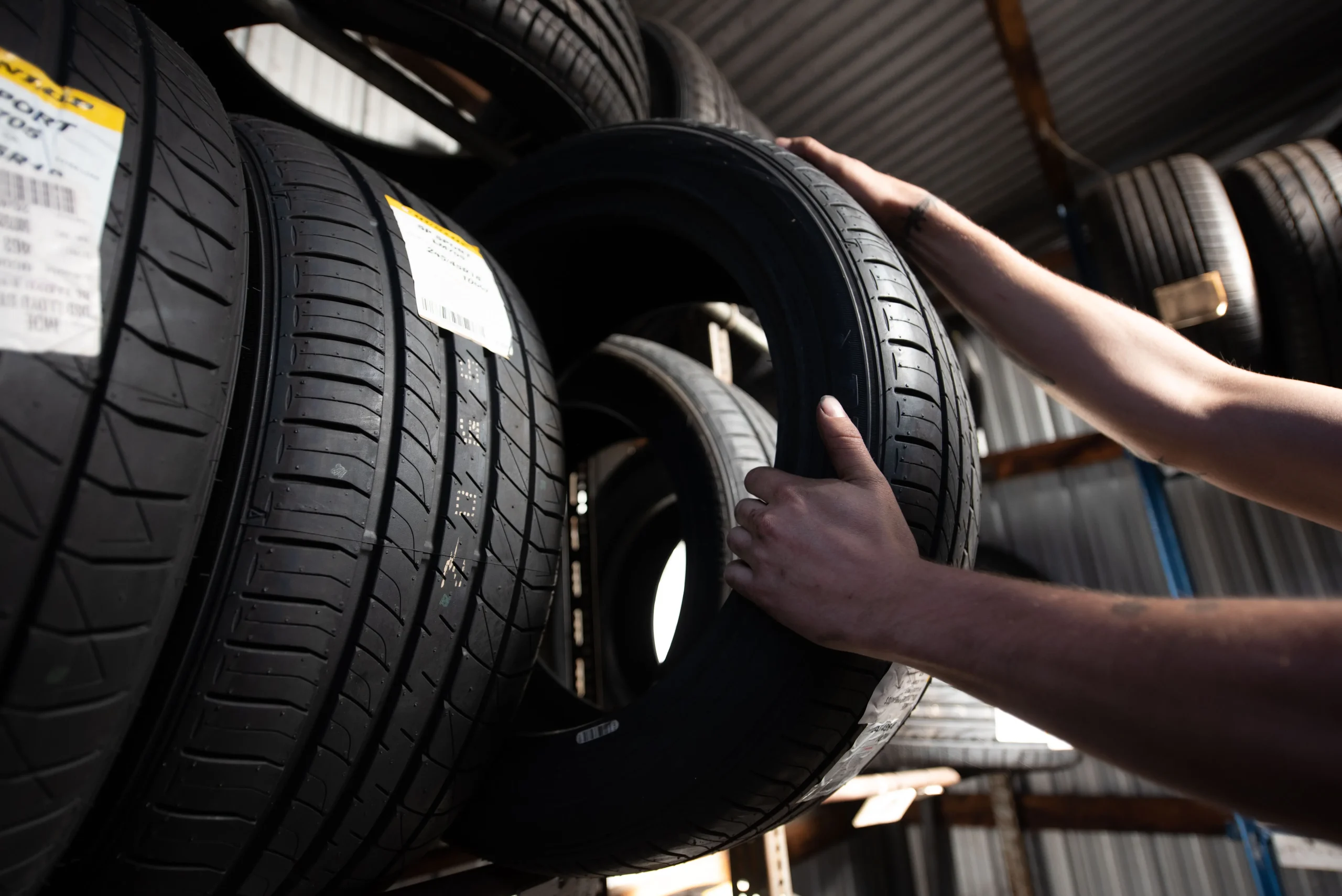
Gravel edges, potholes and load all knock a ute's wheel alignment out, and unsealed roads chew tyres faster than sealed ones. Poor alignment then wears the tyres unevenly and pulls the steering. A service checks tyre tread and wear pattern, tyre pressures for the load being carried, and whether the alignment has drifted. Uneven wear across a tyre is often a sign of an alignment or suspension fault, not a tyre fault. For a work ute, running the right pressure for the actual load matters as much as the tread depth.
Filters, oil and diesel: dust and the long runs between jobs
Dust causes the damage you don't see on unsealed roads. It loads up the air filter and can slip past a poorly sealed one straight into the engine. On dusty runs, the air filter needs checking far more often, sometimes as early as every 5,000 km. Diesel utes also have a fuel filter and a water separator, which catches water before it reaches the injectors, and both work harder on long regional runs. The oil itself degrades faster under heat, load and short trips, so the oil and oil filter are the core of the service. Most utes run a 10,000 to 15,000 km or 12 month interval, but hard conditions can halve that. If your diesel does a lot of short, slow farm trips, its diesel particulate filter (the DPF, which traps soot from the exhaust) can clog because it never gets hot enough to clean itself. That is a topic on its own, and worth raising at the service if you have seen a DPF light.
Cold mornings, damp air and the battery
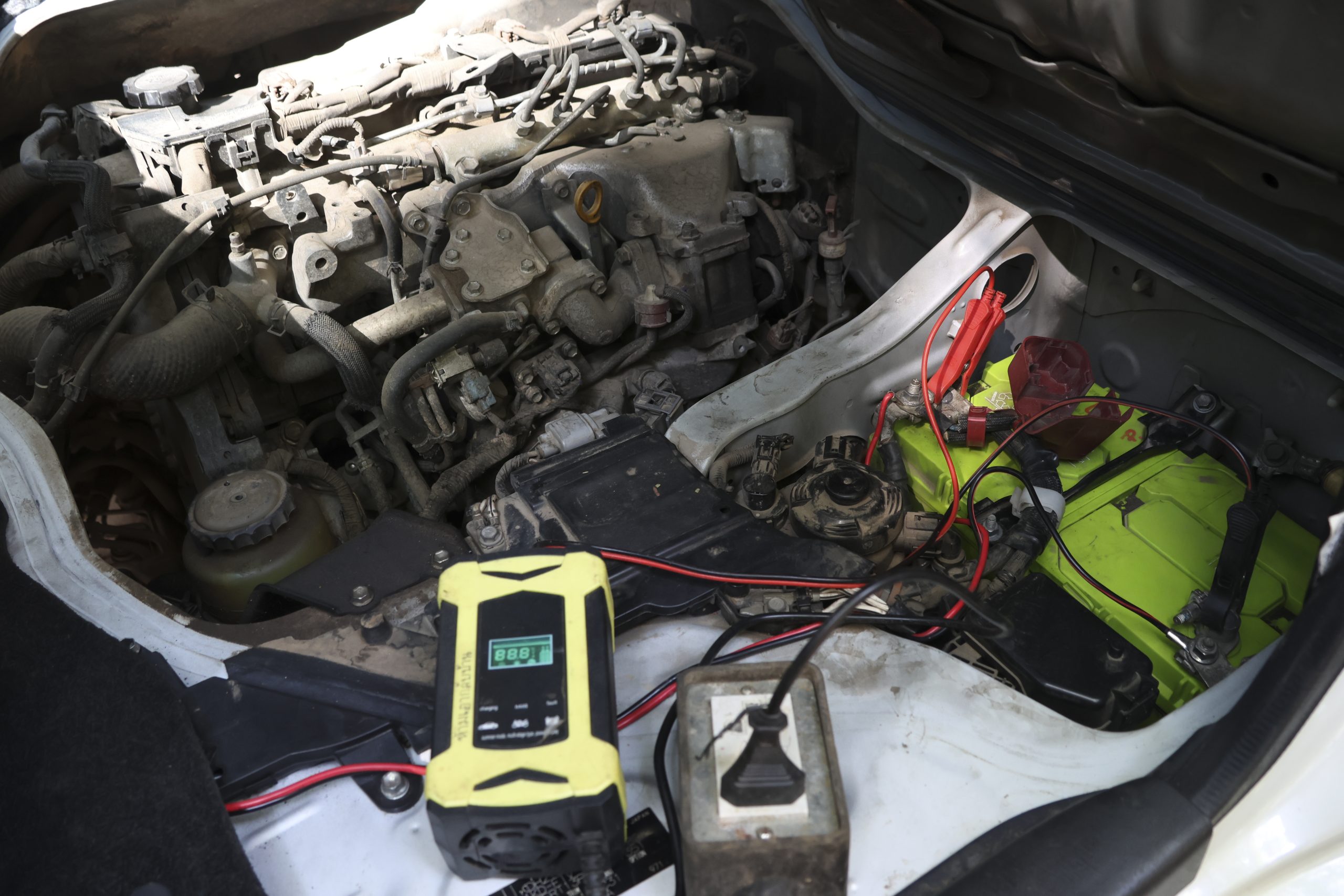
Gippsland mornings get cold and damp, and that is hard on a battery and on cold starting. A weak battery that coped through summer can fail on the first frosty run. The service checks battery charge and the state of the terminals and connections, which corrode in damp air. On a diesel, the glow plugs, which warm the cylinders to help a cold start, also get a look if starting has been slow.
How often should a work ute be serviced out here?
A work ute in Gippsland usually needs servicing more often than the logbook's standard interval. Most utes are set at 10,000 to 15,000 km or 12 months, whichever comes first, and it varies by make. Manufacturers already list “severe” or “heavy” conditions that shorten this, and they read like a Gippsland work week: towing, heavy loads, dust, mud, and repeated short trips. Under those, many drop the oil interval to around 5,000 to 7,500 km or six months.
Not every problem is regional, of course. A ute wears from age and kilometres wherever it lives, and plenty of service items are the same in Moe as in Melbourne. The Gippsland conditions just bring some of them forward. Servicing at an independent workshop keeps a new-car warranty valid, as long as the schedule is followed and the work is logged, which is set out under Australian Consumer Law.
Common questions
Usually, yes. Towing keeps the engine, gearbox, brakes and cooling under load, which is one of the conditions makers list as “severe.” Regular towing is a good reason to shorten the interval and to have the transmission fluid and brakes checked more often.
It wears specific parts faster. Corrugations are hard on suspension and steering, and dust loads the air filter and can reach the engine. Gravel does not damage everything, but it does bring suspension, bearing and filter checks forward.
Some of it is the same, but a diesel adds a fuel filter and water separator to check, and often a DPF to keep an eye on. Diesels doing short, slow trips need those watched more closely than a highway diesel does.
If your ute has been living on gravel and towing hard, book it in before the next big run, not after something lets go on the side of the road. Lloyd St Automotive in Moe can service it around the way it actually gets used.
Cost and interval figures in this article are general market ranges for guidance only. They are not Lloyd St Automotive pricing or a fixed service schedule; the right interval is the one in your vehicle's logbook.