Yes. Light bars and driving lights are legal in Victoria if they meet the VicRoads rules. You can fit up to four extra lamps on top of the headlights, light bars included, and they must give white light and be fitted symmetrically. They may only come on with high beam, so they have to go off whenever you dip.
Picture a new bar fresh out of the box and a ute that does most of its night driving on dark Gippsland back roads. Where that bar is mounted and how it is wired decide whether it is legal.
Driving lights, light bars, fog lights and work lights
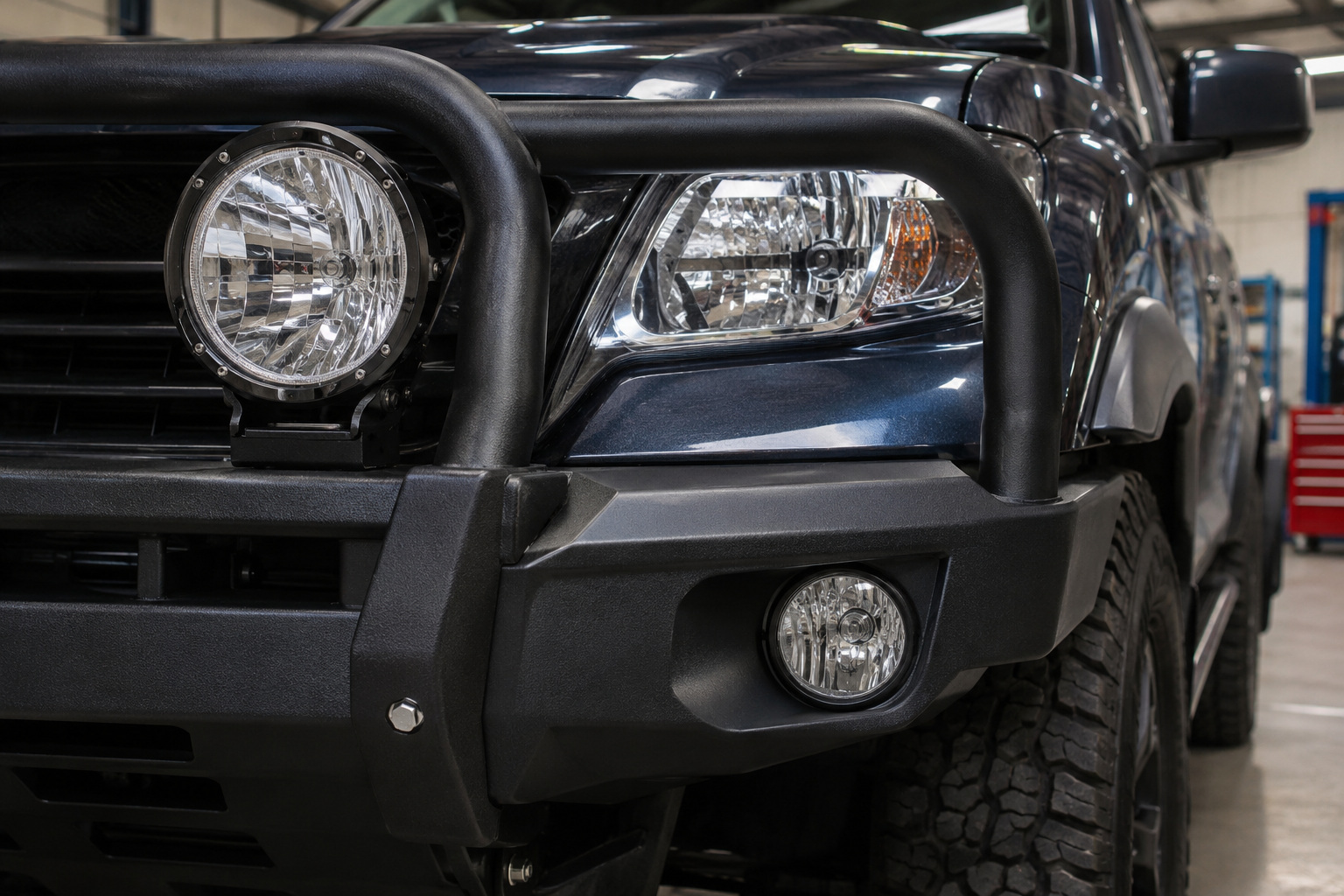
Four kinds of extra light get fitted to utes and four-wheel drives. Each has its own rule about when it can be switched on.
On the road, a light bar is a driving lamp, not a work light. Calling it a work light does not get it past the high beam rule, because work lights may only be used while the vehicle is stopped.
| Light | What it is for | When it can be on | The rule to know |
|---|---|---|---|
| Driving lights | Extra white light thrown well ahead of the vehicle | Only while high beam is on | Counted in the limit of four extra lamps, and pairs must be symmetrical |
| LED light bars | A row of LEDs in one housing, used as forward driving light | Only while high beam is on | Counted in the same limit of four, and a single bar must sit on the centreline |
| Fog lights | Light for driving in fog or bad weather | Only in fog or other hazardous weather that reduces visibility | Set by rule 217 of the road rules |
| Work lights | Light for working on the vehicle or its load, or reading signs, while stopped | Only while the vehicle is stationary | No more than two, white, switched separately, and never used to add to forward light |
How many lights can you fit, and where can they go?
VicRoads lists extra forward lamps that meet the Standards for Registration as an approved modification. That means a compliant fitting does not need a VASS approval certificate, the certificate a signatory under the Vehicle Assessment Signatory Scheme issues for a modified vehicle. The approval does not cover lights fitted in a way that breaks the rules. Any modification VicRoads does not list as approved needs a VASS certificate or may be prohibited.
The rules below come from the VicRoads modification guide, Vehicle Standards Information 8 (VSI 8). It applies to vehicles with a gross vehicle mass (GVM) of 4.5 tonnes or less.
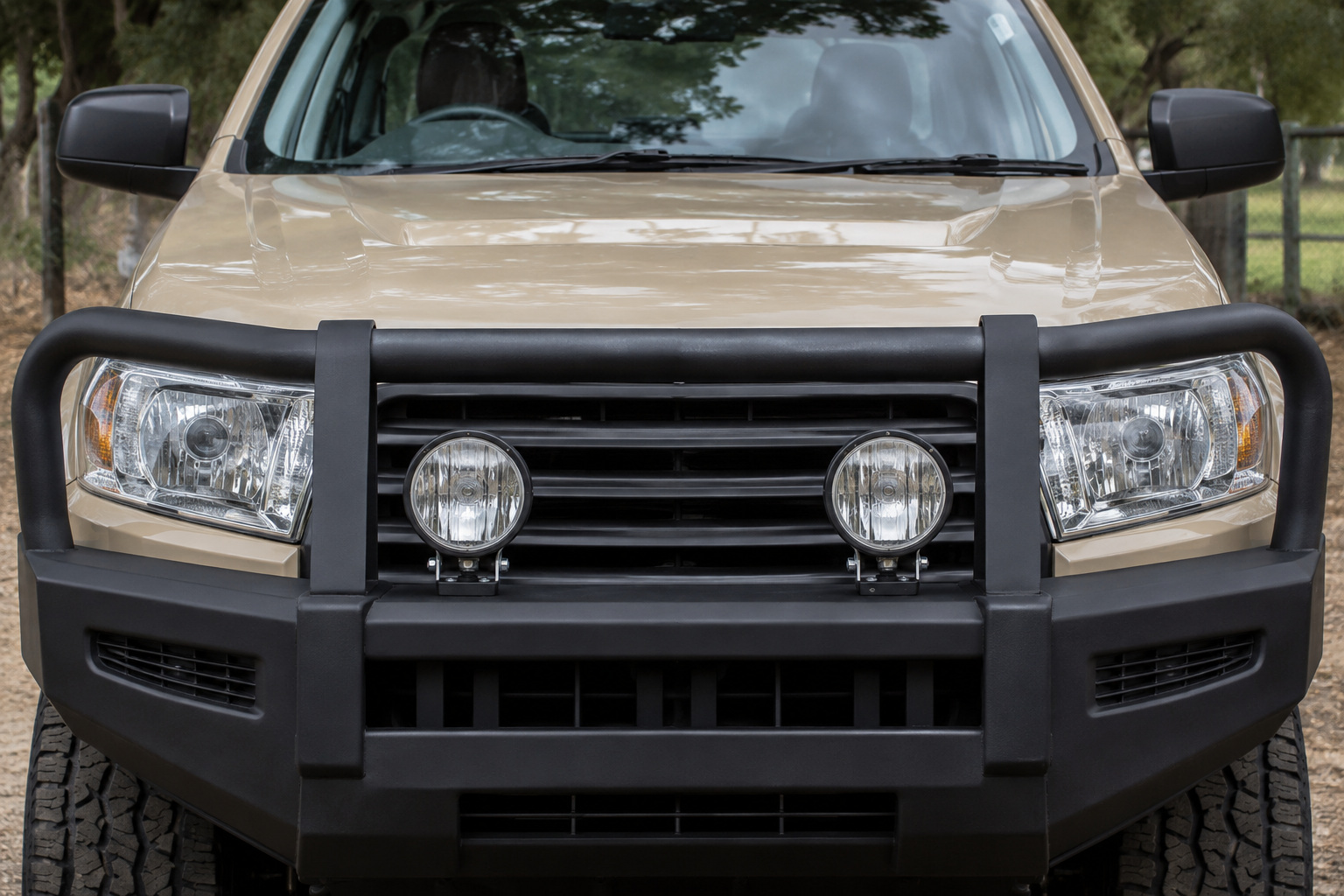
- Up to four additional headlights, light bars included, on top of the vehicle’s main headlights.
- White light only, with the main beam thrown ahead of the vehicle.
- Pairs fitted symmetrically about the centre of the vehicle, at the same height, and giving about the same amount of light.
- A single light bar mounted on the vehicle’s centreline.
- Driving lamps allowed above the roof line, but every driving lamp in the front half of the vehicle, measured from the front to the rearmost point.
- No light reflecting off the vehicle into the driver’s eyes.
- No lamp mounted in a way that may increase the risk of injury to pedestrians.
- No lamp obstructing the driver’s view of the road.
- Lamps mounted on a bull bar must not stick out above its top or in front of it.
- Lamp covers clear, untinted, uncoloured and clean.
- No lamps designed for boats or aircraft.
Late model utes add one more check. Auto emergency braking, adaptive cruise control and lane support rely on sensors and cameras, and VSI 8 says a modification that interferes with them or stops them working is not acceptable. A bar or a pair of lamps across the front can sit in a sensor’s path, so find out where the sensors are before choosing a mount.
When driving lights and light bars must go off
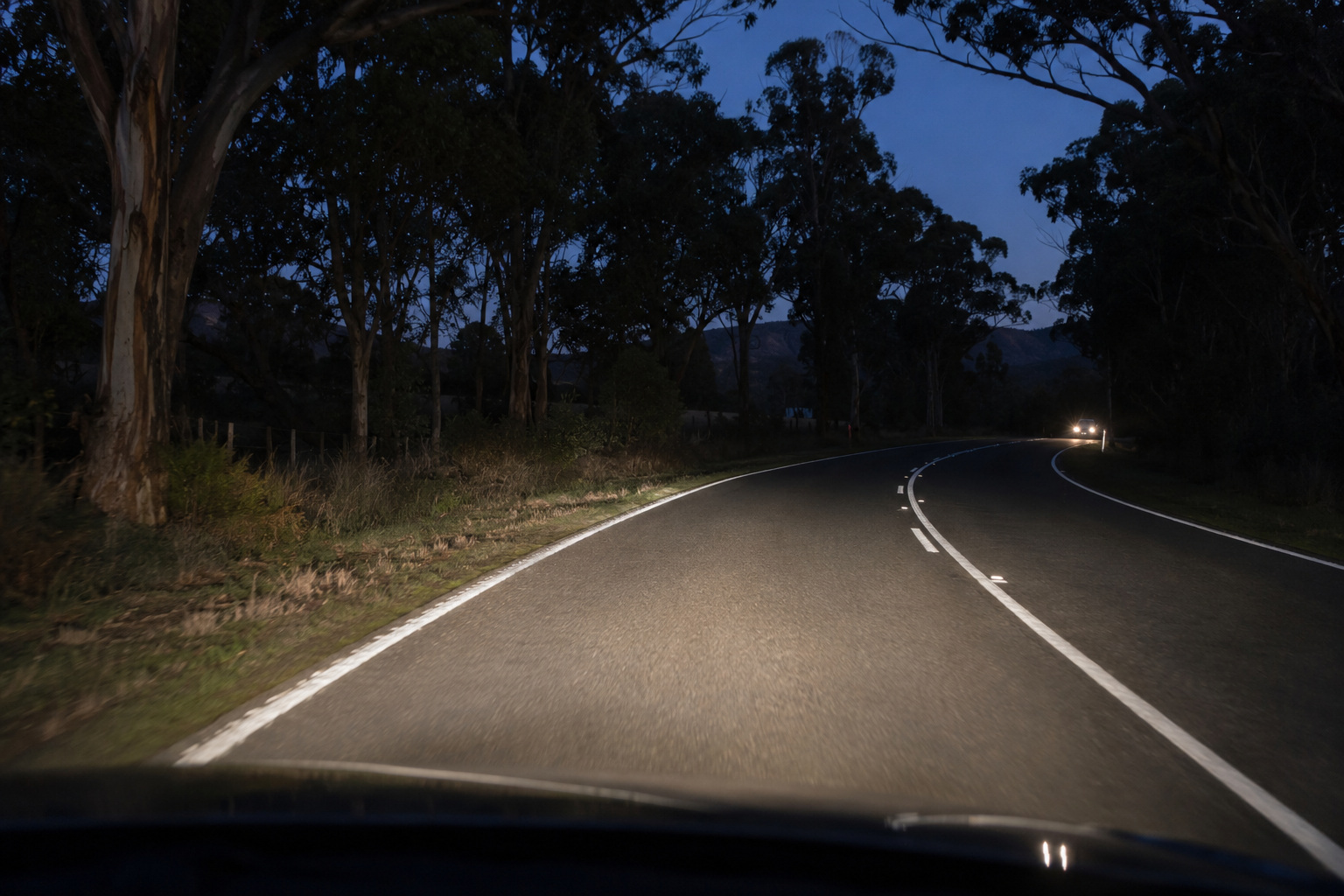
Because they are tied to high beam, the high beam rules decide when they go off too. Three rules in the Road Safety Road Rules 2017 apply:
Wired correctly, dipping the headlights for traffic turns the driving lights and the bar off in the same movement. Wired to their own switch, they can stay on after the headlights dip. That breaks the VicRoads fitting rule and risks dazzling the oncoming driver.
- Rule 218: no high beam less than 200 metres behind a vehicle travelling the same way, or less than 200 metres from an oncoming vehicle. A brief flash from low beam to high beam just before you start to overtake is allowed. The penalty is 5 penalty units.
- Rule 219: no light may be used to dazzle another road user, or in a way that is likely to dazzle one. The penalty is 3 penalty units.
- Rule 217: fog lights only in fog or other hazardous weather that reduces visibility. The penalty is 3 penalty units.
Rule 219 gives no distance and no brightness figure, so whether a light dazzles is a judgement made on the road. That is why aim matters. On unlit roads out of the Latrobe Valley at night, good driving lights earn their keep, and with no street lighting an oncoming driver gets the full force of a bar pointed too high.
Wiring driving lights so they follow high beam
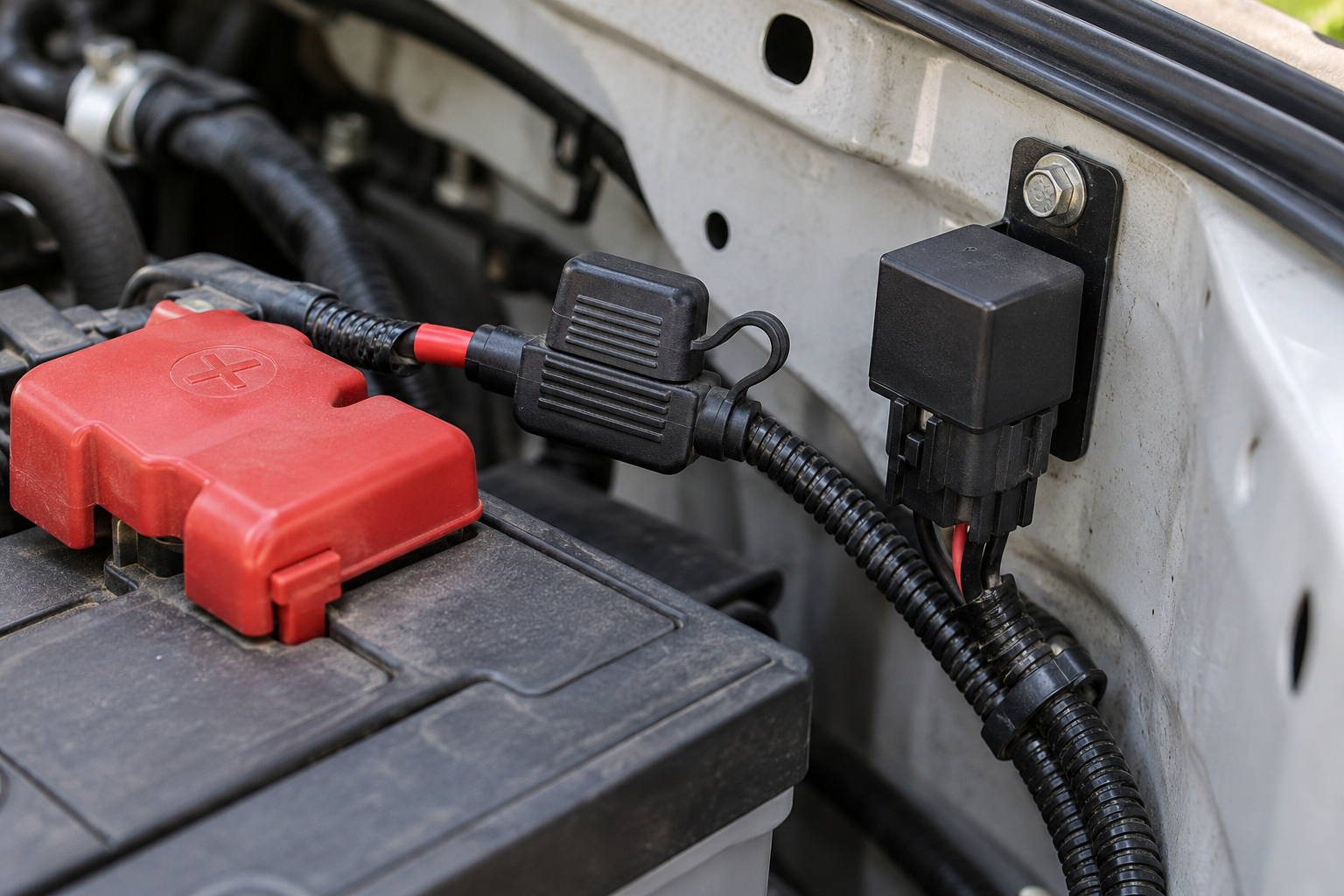
One rule decides the wiring. Driving lamps and light bars must only be able to be switched on while the high beams are on, and must turn off when high beam goes off. VSI 8 sets that out, and the VicRoads roadworthiness standard repeats it. A dash switch is fine, as long as it only works with high beam on.
A relay is an electrically operated switch, so a small signal from the high beam circuit can turn on the heavier circuit that feeds the lamps. A sound installation usually comes down to these points:
- Trigger the lights from the high beam circuit, so they cannot run on low beam or on their own.
- Use the switching arrangement the lamp maker specifies. With a conventional relay harness, the relay keeps the lamp current out of the dash switch and factory headlight wiring.
- Fuse the power feed close to the battery.
- Size the cable for the load the lights put on it.
- Give the circuit a clean, solid earth.
- Seal every connection against water and dust.
- On an older vehicle, allow for the extra load on the alternator and battery.
Getting those details right helps protect the wiring from overloads and short circuits. An existing fault, such as dim or flickering headlights, is worth sorting before anything new is added to the circuit.
Will a light bar or driving lights pass a roadworthy?
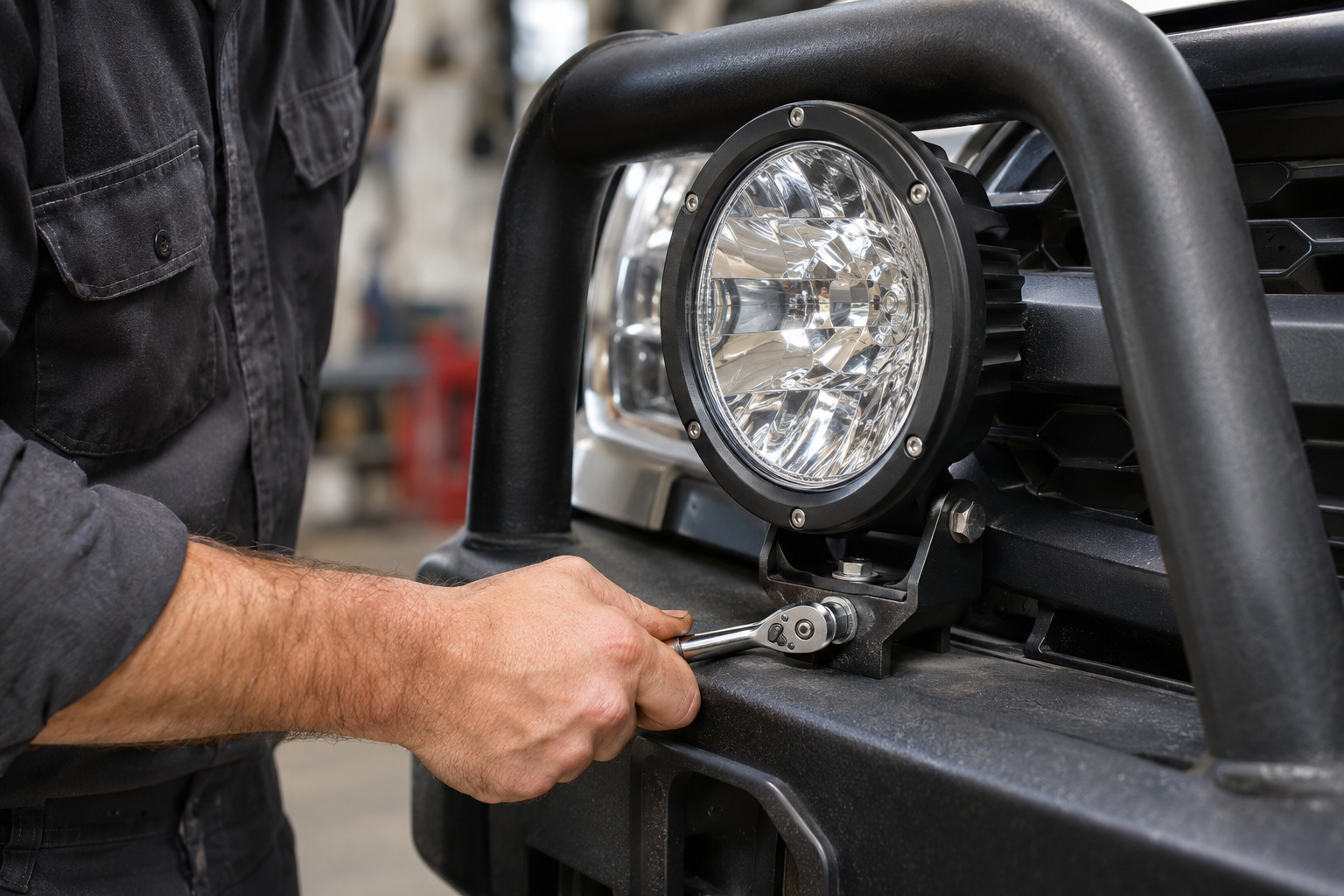
They can, as long as they only work with high beam and turn off with it, which is what the VicRoads roadworthiness requirements (VSI 26) ask of auxiliary driving lamps and LED light bars. Every lamp must also be securely mounted and correctly aimed, with a lens of the correct colour, clean inside and free of damage that could let dust or water in. A bar on its own switch or a loose bracket is a likely problem at inspection, and the wider picture is in what a roadworthy certificate checks and what commonly fails.
Planning to add driving lights or a light bar, or not sure how an existing setup was wired? Book driving light fitting and wiring with Lloyd St Automotive on (03) 5127 3588, or use the enquiry form.
Frequently asked questions
Can a light bar be run on its own switch?
Not for road use in Victoria. A switch in the cab is allowed, but it must only work while high beam is on, and the bar has to drop out as soon as high beam does.
Do you need engineering or VASS approval to fit driving lights?
Not when the lamps meet the Standards for Registration. Compliant extra forward lamps are already on the VicRoads approved list, so no certificate is needed. A setup outside those rules needs one, or may not be allowed at all.
Can a light bar be used as a fog light?
No. A bar counts as a driving lamp and is only allowed to light up with high beam, whereas fog lights are separate lamps meant for fog or weather that cuts visibility.