Two quotes for the same car, hundreds of dollars apart, and no explanation on either of them.
Four things set the price of a car service. What the manufacturer’s schedule calls for at that kilometre reading. What your vehicle takes in oil and filters. What the inspection turns up on the day. And how long the labour takes. A small service and a major one are different lists of work, so they are different prices. Most of the gap between two numbers comes down to the first of those four.
What is included in a car service?
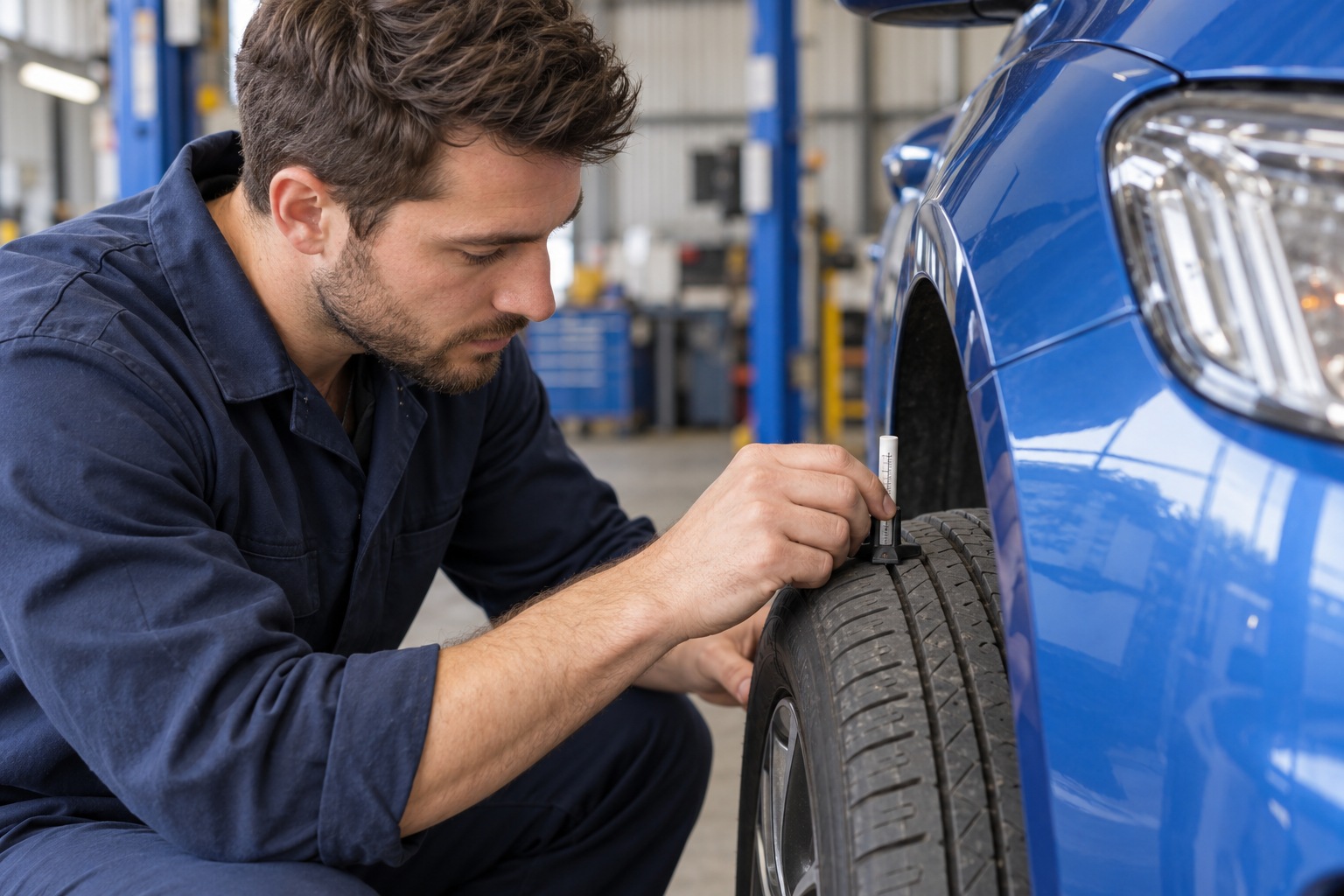
A car service is a set list of replacements and checks, done to a schedule and written up afterwards. Part of that list is the same on every car at every interval.
That is the floor. It is the same work on a hatchback as on a ute. On its own it is the cheapest service a workshop can do. An oil change by itself is not a service. It is one line on the list.
- Engine oil drained and replaced, with a new oil filter fitted.
- Fluid levels checked and topped up, including coolant, brake fluid and washer fluid.
- Tyres checked for pressure, tread depth and uneven wear.
- Brakes inspected, with pad and disc thickness measured.
- Belts, hoses, the battery and the lights checked.
- A road test, then the logbook stamped or updated.
Everything past that floor is added by the schedule. The schedule is not the workshop’s idea of a good service. It belongs to the manufacturer, and it is printed in the logbook that came with the car.
Why is my car service so expensive this time?
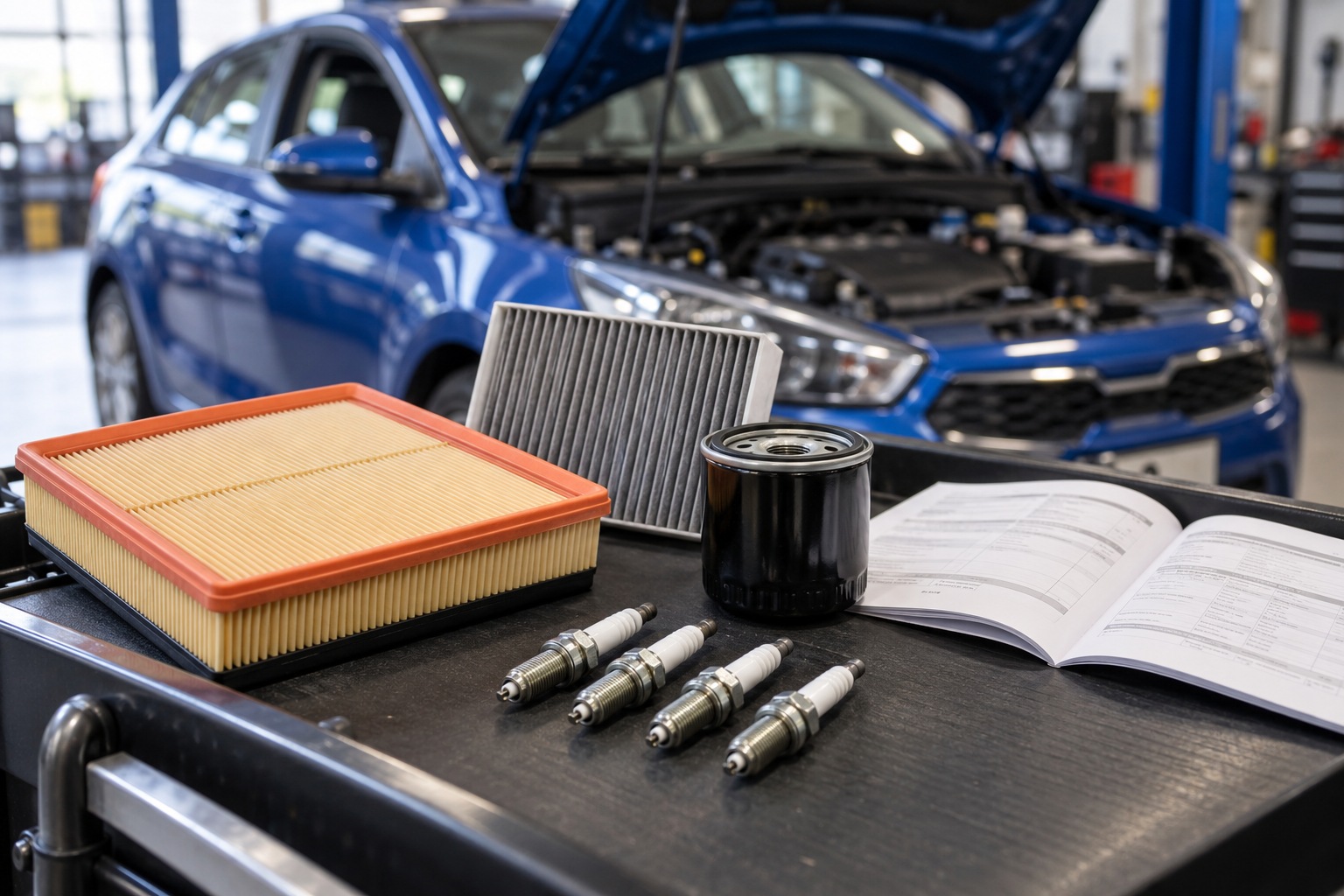
A service usually costs more this time because the car has reached one of the bigger intervals, and nobody warned you it was coming. Schedules step up. The small services are oil, a filter and the checks. Every so often the schedule adds items that cost real money, and that service costs more than the two either side of it.
The pattern is broadly the same across makes. The readings are not.
- Brake fluid runs on a two to four year clock. On most schedules that lands somewhere between 30,000 and 60,000 km.
- Filters keep their own time. An air filter commonly falls due every 30,000 to 60,000 km, and a cabin filter anywhere from every service to every second year.
- Spark plugs sit between about 60,000 and 150,000 km, depending on the type the engine uses. A coolant change is usually further out again, and on some schedules it is not due until past 200,000 km. Automatic or CVT fluid, where the schedule calls for it at all, is commonly around the 90,000 km mark.
- A timing belt, on the engines that still use one, is commonly set at 60,000 to 100,000 km or five to seven years, whichever comes first. It is the most expensive routine item on the whole list. Budget roughly $550 to $1,300 fitted, and more again on some European engines.
Those readings move from make to make, and sometimes between two engines in the same model. Your logbook is the only version that counts. That is why a workshop quoting properly asks for your kilometre reading first.
Workshops call the small ones minor services and the big ones major services. The words are not standardised. The list of items is what you pay for, so that is what to compare.
Service intervals for regional Victorian driving are covered separately, for anyone whose question is how often rather than how much.
Why does a diesel service cost more?
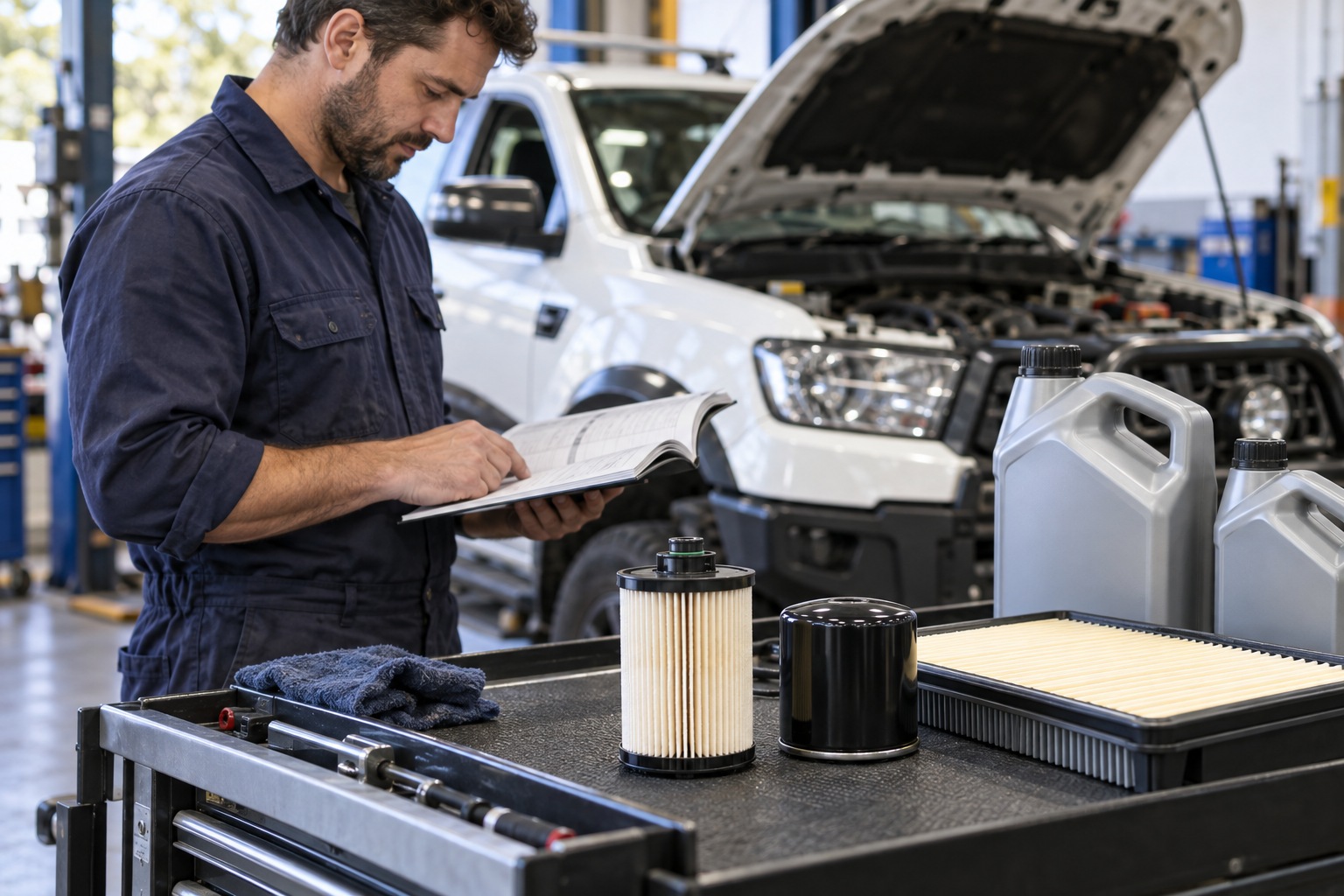
A diesel takes more oil, and it carries a filter your petrol car does not have. Those two facts explain most of the difference on the invoice.
A common dual cab diesel ute holds around five and a half to eight litres of engine oil. A small petrol car holds about four. That is half as much oil again at the low end, and closer to double on the bigger engines.
Then there is the fuel filter. On a diesel it is a scheduled replacement, often with a water separator built into it. How often it falls due moves further between makes than any other item on the list. One current dual cab replaces it at every service, and another sets no distance for it at all, because each vehicle reaches that point differently. Fitted, that one item runs about $120 to $400, depending on where the filter sits on the vehicle. Air filters go the same way on a ute that works in dust. They fill sooner, so they get replaced sooner.
If you run a work ute, the numbers look like this. A minor logbook service on a common dual cab generally runs $320 to $520. A major interval, with four-wheel drive driveline items added, runs $650 to $1,200. And a ute that racks up big working kilometres reaches those expensive intervals sooner in the year than a car that stays in town.
What is quoted, and what is found on the day
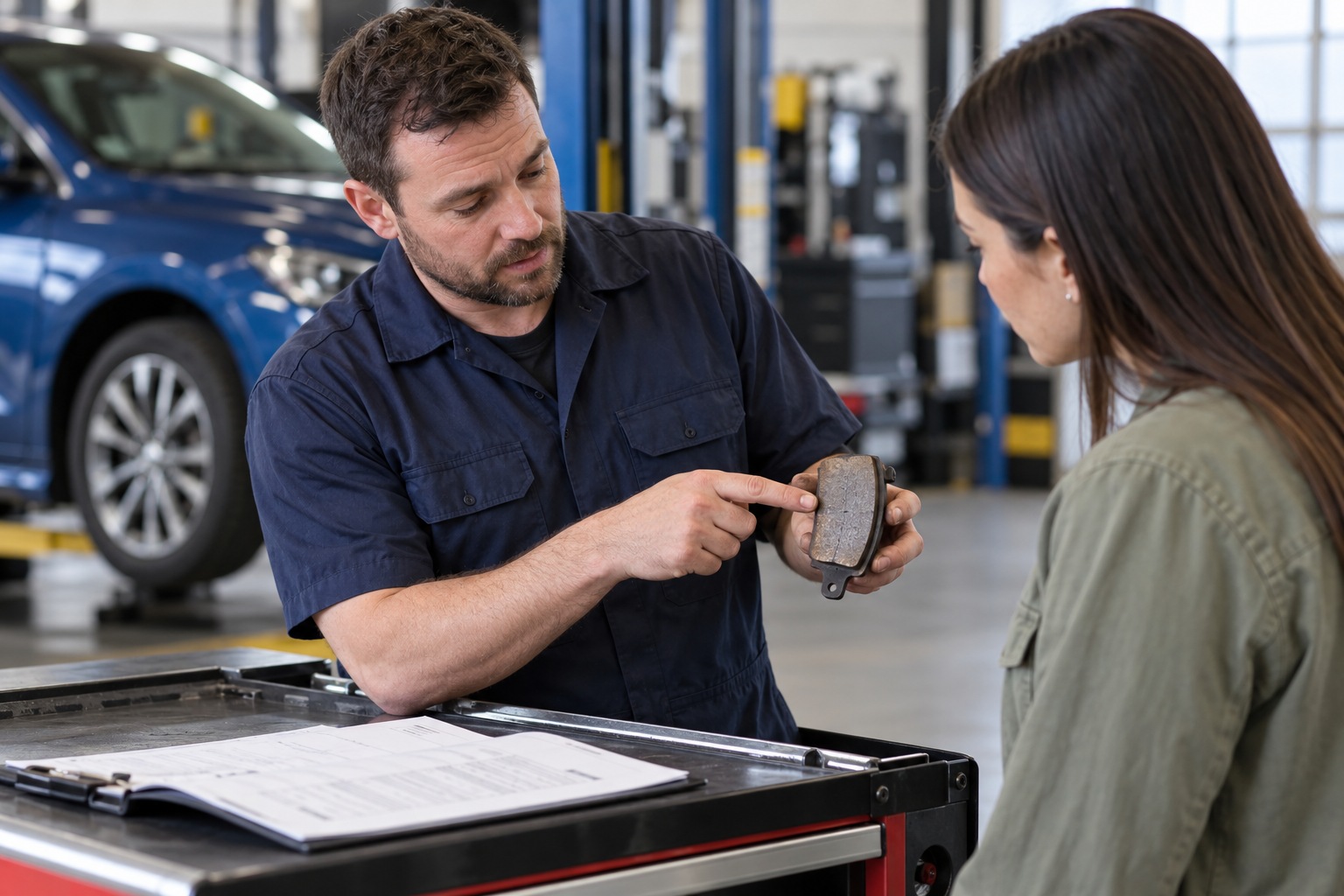
A service is planned work. A repair is what the inspection turns up. They are two different jobs, and they should be two different lines on the invoice.
The inspection is the one part of a service nobody can price in advance. Worn brake pads, a weeping hose, a cracked belt, a tyre down to the wear bars. None of that is on the schedule, because nobody knew about it when the schedule was written.
A workshop that never comes back to you with a bigger number is either not looking properly, or was padding the estimate to start with. An honest quote for a service is a quote for the service. It cannot include the repair that has not been found yet.
What separates a good workshop from a poor one is what happens next. Consumer Affairs Victoria advises drivers to make it clear they must be called before any work starts on a repair they have not authorised. Say that when you book, not when you collect the car. Then ask for anything found to be split two ways: what needs doing now for safety, and what can wait until the next service.
How much does a car service cost?
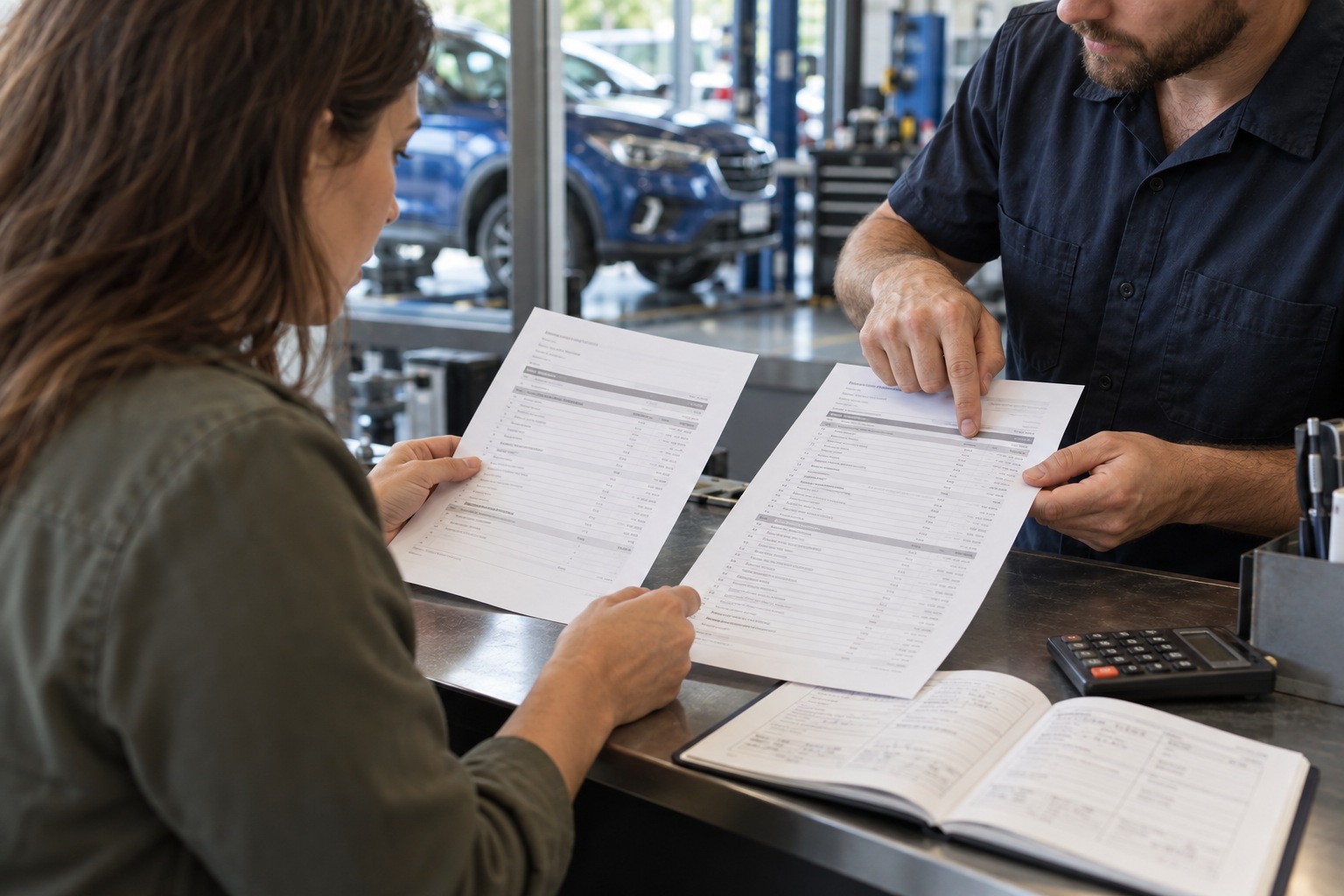
A basic service on an ordinary petrol car generally runs $200 to $350 in Australia. A standard logbook service at a routine interval sits around $350 to $500. A major interval, where plugs, coolant or transmission fluid fall due, runs $450 to $1,100. A service where the timing belt falls due sits above all of that, because the belt is the most expensive routine item on the list.
Before you weigh up two numbers, check what a standard service covers at each workshop. Two quotes on the same car are usually two different lists, and the cheaper one is often the shorter one.
One thing that is easy to miss out here. A quote an hour up the freeway can look cheaper on paper. Then the car has to get there and come home, twice, and somebody has to drive the second car both ways. Across the Latrobe Valley that is most of a working day, and it usually swallows the saving.
Every figure above is what this work costs in Australia generally, taken from manufacturers’ published service schedules and service price lists and from Australian trade guides. None of it is this workshop’s price list, and the only number that binds is the one written on a quote.
Ask for the item list with your quote

When you ring for a price, ask two questions. Which items does the schedule add at my kilometre reading? And which ones fall at the next service instead? A workshop that can answer both is reading your logbook. A workshop that reads you one number off a price list is reading something else.
Have the logbook in front of you and know the reading before you pick up the phone. It turns a vague enquiry into a real quote, and it works on any workshop, not only this one. Lloyd St Automotive in Moe can be reached through the contact form or by phone during the week.
Frequently asked questions
What is the difference between a minor and a major service?
A minor service is the oil, the filter, the fluid checks and the inspection. A major one is all of that plus whatever items the schedule adds at that reading. That is where the extra hundreds usually come from. Same workshop, same car, longer list.
What is the difference between a service and a repair?
The service is the planned part, drawn from a list the manufacturer wrote before your car was built. A repair puts right something that has worn out or failed. The two often happen on the same visit, and they should appear separately on the invoice.
Why is one quote for the same car so much higher than another?
Usually the two quotes are not for the same job. One may be priced as a basic oil and filter change, while the other is priced for the interval the car has reached. Ask each workshop which items it has counted in.
Can a workshop charge more than the price it quoted?
An estimate covers the work it describes, and a repair found during the inspection is not part of that work. Tell the workshop at the counter that you want a phone call before anything outside the quote is started.
Does a bigger service bill mean something is wrong with my car?
Not by itself. Most of the jump comes from scheduled items falling due at that reading rather than from a fault. Where the extra cost is a repair instead, the workshop should be able to show you the worn part it found.