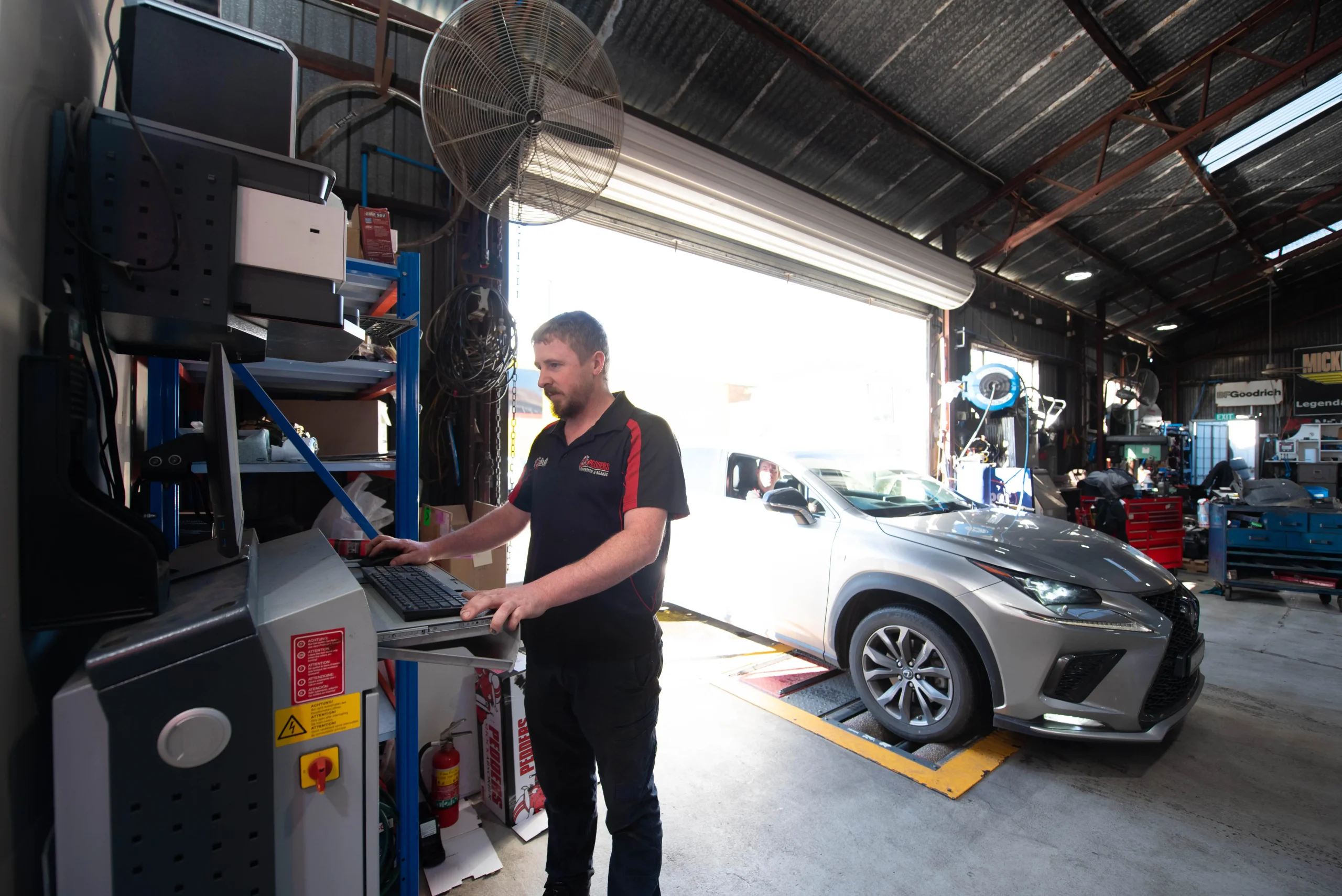
Your manufacturer’s logbook says 15,000 kilometres or twelve months, whichever comes first. That schedule was written for a car cruising sealed suburban streets in mild weather. If you live in the Latrobe Valley, your car has a very different life.
Between the gravel back roads out toward Walhalla, the morning frost that settles across Moe in July, and the summer dust that kicks up on every unsealed stretch between Erica and Rawson, regional driving places demands on a vehicle that a factory service schedule simply does not account for.
The question isn’t really whether you should service more often. It’s by how much, and what to pay attention to.
The question isn’t really whether you should service more often. It’s by how much, and what to pay attention to.
What manufacturers mean by “normal” conditions
Open any owner’s manual and you’ll find two service schedules buried in the maintenance section. The first is for what the manufacturer calls normal conditions. The second, often printed in smaller type, is the severe or heavy-duty schedule. Most people glance at the first and assume it applies to them.
The catch is that “normal”, in automotive engineering terms, means predominantly highway driving on sealed roads, in moderate temperatures, with no trailer behind you and no load on the roof. It means consistent engine speeds, minimal braking, clean air flowing through the intake. It’s the laboratory ideal.
For a car based in the Latrobe Valley, where a weekend run to the coast involves winding through South Gippsland’s back roads and a trip to the snow means climbing into the ranges above Rawson, that laboratory ideal is a long way from reality. Most regional drivers meet at least two or three of the criteria manufacturers define as severe without even thinking about it.
The catch is that “normal”, in automotive engineering terms, means predominantly highway driving on sealed roads, in moderate temperatures, with no trailer behind you and no load on the roof. It means consistent engine speeds, minimal braking, clean air flowing through the intake. It’s the laboratory ideal.
For a car based in the Latrobe Valley, where a weekend run to the coast involves winding through South Gippsland’s back roads and a trip to the snow means climbing into the ranges above Rawson, that laboratory ideal is a long way from reality. Most regional drivers meet at least two or three of the criteria manufacturers define as severe without even thinking about it.
What regional driving does to your car
Dust and gravel
Australia has more than 574,000 kilometres of unsealed road, making up over 60 per cent of the entire road network. In the Latrobe City municipality, unsealed roads are maintained by council under the Road Management Plan, and residents who regularly use them know the toll they take.
Gravel and dust are an engine’s worst enemy after water. Fine particles drawn through the air intake system clog the engine air filter far faster than sealed-road driving ever would. A filter rated for 20,000 to 30,000 kilometres under normal conditions may need replacing at half that interval if you’re regularly turning off the bitumen. When a filter clogs, the engine runs rich (too much fuel, not enough air), which means sluggish performance, worse fuel economy, and accelerated wear on internal components.
Dust does not stop at the air filter, either. It works into brake components, coats suspension bushings, and infiltrates cabin ventilation. A mechanic familiar with regional cars will check all of these during a service, not just the engine bay.
Gravel and dust are an engine’s worst enemy after water. Fine particles drawn through the air intake system clog the engine air filter far faster than sealed-road driving ever would. A filter rated for 20,000 to 30,000 kilometres under normal conditions may need replacing at half that interval if you’re regularly turning off the bitumen. When a filter clogs, the engine runs rich (too much fuel, not enough air), which means sluggish performance, worse fuel economy, and accelerated wear on internal components.
Dust does not stop at the air filter, either. It works into brake components, coats suspension bushings, and infiltrates cabin ventilation. A mechanic familiar with regional cars will check all of these during a service, not just the engine bay.
Temperature swings
The Latrobe Valley sits in a natural bowl between the Strzelecki Ranges to the south and the foothills of the Great Dividing Range to the north. That geography produces a wide temperature range: winter mornings in Moe regularly dip below 4°C, while February afternoons push past 26°C. Extreme days can see the mercury climb well above 35°C in summer or hover near zero through prolonged cold snaps.
Engine oil is formulated to operate within a certain viscosity range. Repeated cycling between cold starts on frosty mornings and high operating temperatures on warm afternoons degrades oil faster than steady-state driving. Coolant systems work harder. Rubber hoses, belts, and seals expand and contract. Over thousands of cycles, these components age more quickly than they would in a stable climate.
Engine oil is formulated to operate within a certain viscosity range. Repeated cycling between cold starts on frosty mornings and high operating temperatures on warm afternoons degrades oil faster than steady-state driving. Coolant systems work harder. Rubber hoses, belts, and seals expand and contract. Over thousands of cycles, these components age more quickly than they would in a stable climate.
Towing and load carrying
The Latrobe Valley is caravan and trailer country. A weekend away might mean hitching a van to Lakes Entrance or loading a boat for a run down to Corner Inlet. Towing is one of the single biggest factors that shifts a vehicle from normal to severe-duty status.
Under towing loads, the engine works harder at every stage: accelerating, maintaining highway speeds, climbing grades, and managing the extra mass through braking zones. Engine oil temperatures rise, transmission fluid heats up, and brake components wear faster. Severe-duty schedules from most manufacturers recommend halving the standard service interval for vehicles that tow regularly. A car with a 15,000-kilometre or twelve-month standard interval might drop to 10,000 kilometres or six months under towing conditions.
Transmission and differential fluids deserve particular attention in tow vehicles. Industry guidance suggests transmission fluid and filter changes every 40,000 to 60,000 kilometres when towing. Differential oils, especially in all-wheel-drive and four-wheel-drive vehicles popular in the region, can degrade faster under sustained loads.
Under towing loads, the engine works harder at every stage: accelerating, maintaining highway speeds, climbing grades, and managing the extra mass through braking zones. Engine oil temperatures rise, transmission fluid heats up, and brake components wear faster. Severe-duty schedules from most manufacturers recommend halving the standard service interval for vehicles that tow regularly. A car with a 15,000-kilometre or twelve-month standard interval might drop to 10,000 kilometres or six months under towing conditions.
Transmission and differential fluids deserve particular attention in tow vehicles. Industry guidance suggests transmission fluid and filter changes every 40,000 to 60,000 kilometres when towing. Differential oils, especially in all-wheel-drive and four-wheel-drive vehicles popular in the region, can degrade faster under sustained loads.
Short trips and cold starts
Not all severe driving happens on highways. Short trips around town, where the engine never fully reaches operating temperature, are classified as severe conditions by every major manufacturer. In cooler months, a five-minute run to the shops in Moe means the engine oil never gets hot enough to burn off condensation and fuel dilution. Over time, this moisture and unburnt fuel contaminate the oil, reducing its ability to protect engine components.
If your car mostly does short runs around town with the occasional longer trip, you may need to service more frequently than someone doing the same total kilometres on the highway.
If your car mostly does short runs around town with the occasional longer trip, you may need to service more frequently than someone doing the same total kilometres on the highway.
A practical guide to service intervals for Latrobe Valley drivers
There is no single number that works for every car. But the following is a reasonable framework based on the conditions most regional Victorian drivers encounter.
What to expect from a regional-focused service
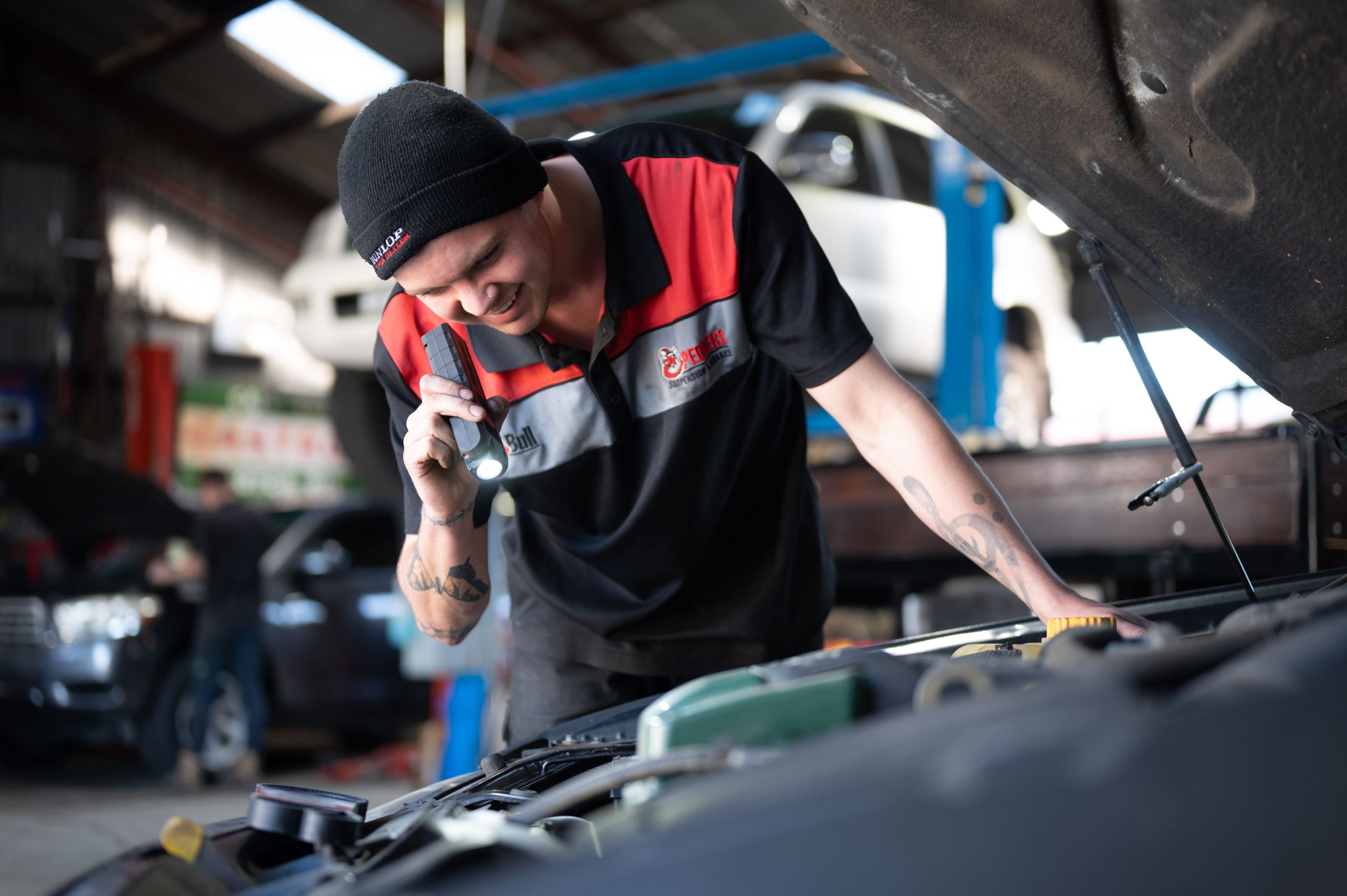
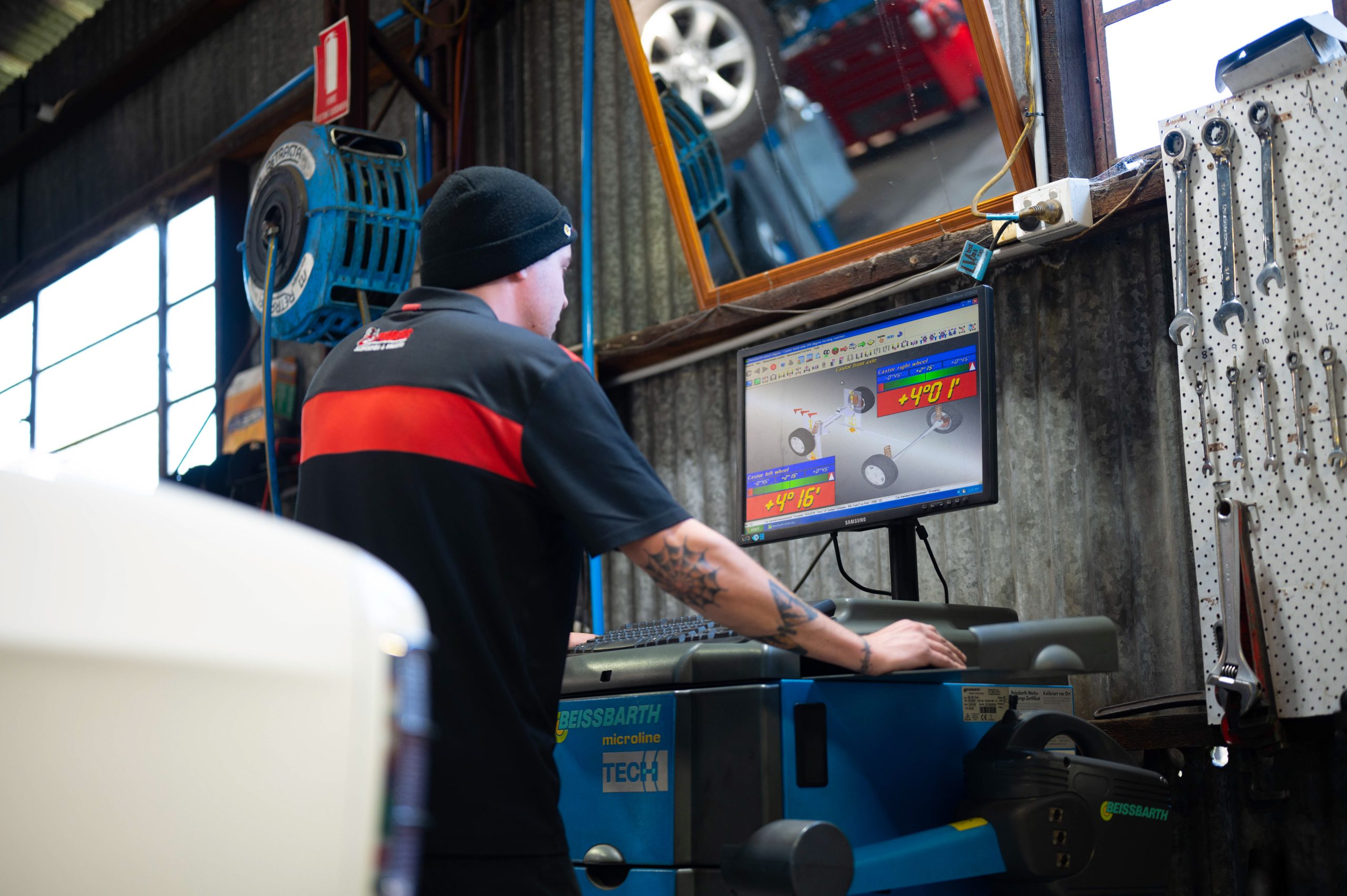
A workshop that understands regional driving conditions will look beyond the standard logbook checklist. At Lloyd Street Tyre and Auto in Moe, which has been servicing vehicles across the Latrobe Valley since 1940, a service covers the full picture of how a car is being used in the local environment.
That means inspecting suspension components for wear caused by rough roads and corrugations, not just checking that the shocks still bounce. It means pulling the air filter and assessing it visually, not just noting the odometer reading. It means looking at brake hardware for dust contamination and checking coolant concentration ahead of winter.
For four-wheel-drive owners heading into the ranges or up to the alpine areas around Mount Baw Baw, a pre-trip inspection is worth considering before any extended off-road driving. Catching a worn CV boot or a marginal brake pad before you’re 30 kilometres up a fire trail is considerably cheaper and less stressful than dealing with it out there.
That means inspecting suspension components for wear caused by rough roads and corrugations, not just checking that the shocks still bounce. It means pulling the air filter and assessing it visually, not just noting the odometer reading. It means looking at brake hardware for dust contamination and checking coolant concentration ahead of winter.
For four-wheel-drive owners heading into the ranges or up to the alpine areas around Mount Baw Baw, a pre-trip inspection is worth considering before any extended off-road driving. Catching a worn CV boot or a marginal brake pad before you’re 30 kilometres up a fire trail is considerably cheaper and less stressful than dealing with it out there.
The resale argument
Beyond keeping your car safe and reliable, consistent servicing has a direct financial benefit. A complete service history is one of the strongest factors in determining resale value in Australia. Industry data suggests a full logbook can boost a used car’s value by up to 20 per cent, while missing records can reduce it by significantly more. Australian buyers place particular weight on documented logbook servicing, and that premium holds whether you’re selling privately or trading in.
For regional drivers who put higher-than-average kilometres on their cars, that service history becomes even more important. It tells a prospective buyer that the vehicle was maintained for the conditions it was driven in, not just left to run until something went wrong.
For regional drivers who put higher-than-average kilometres on their cars, that service history becomes even more important. It tells a prospective buyer that the vehicle was maintained for the conditions it was driven in, not just left to run until something went wrong.
Does regional driving shorten the recommended service interval for your vehicle?
The service schedule printed in your logbook is a starting point, not a finishing line. If your car lives in regional Victoria, it works harder than a city car covering the same kilometres. Dust, temperature variation, rough roads, towing, and short-run driving all accelerate wear on oil, filters, brakes, and suspension.
The cost of servicing a little more often is small compared to the cost of a major repair caused by neglect, or the resale hit of a patchy logbook. A good local mechanic who knows the conditions your car faces is the best guide to getting the intervals right.
Lloyd Street Tyre and Auto is at 85 Lloyd Street, Moe, and can be reached on (03) 5127 3588. The workshop is open 8:30am to 5:00pm, Monday to Friday.