The boat has been upgraded, or the van is bigger than the last one. The question is whether the tow vehicle is set up for it.
Whether a trailer needs brakes comes down to its weight, and the number the rule uses is the trailer’s GTM. That is the load carried by the trailer’s own axles when it is loaded and hitched up. It is stamped on the trailer’s plate. Over 750 kilograms GTM a trailer has to have brakes, and a trailer plated under that needs none. Over 2 tonnes GTM the driver also has to be able to work those brakes from the driving position. On an electric system that means a controller in the tow vehicle.
Boat owners, caravanners, farmers and tradies towing plant all reach this question before they buy anything.
When does a trailer have to have brakes?
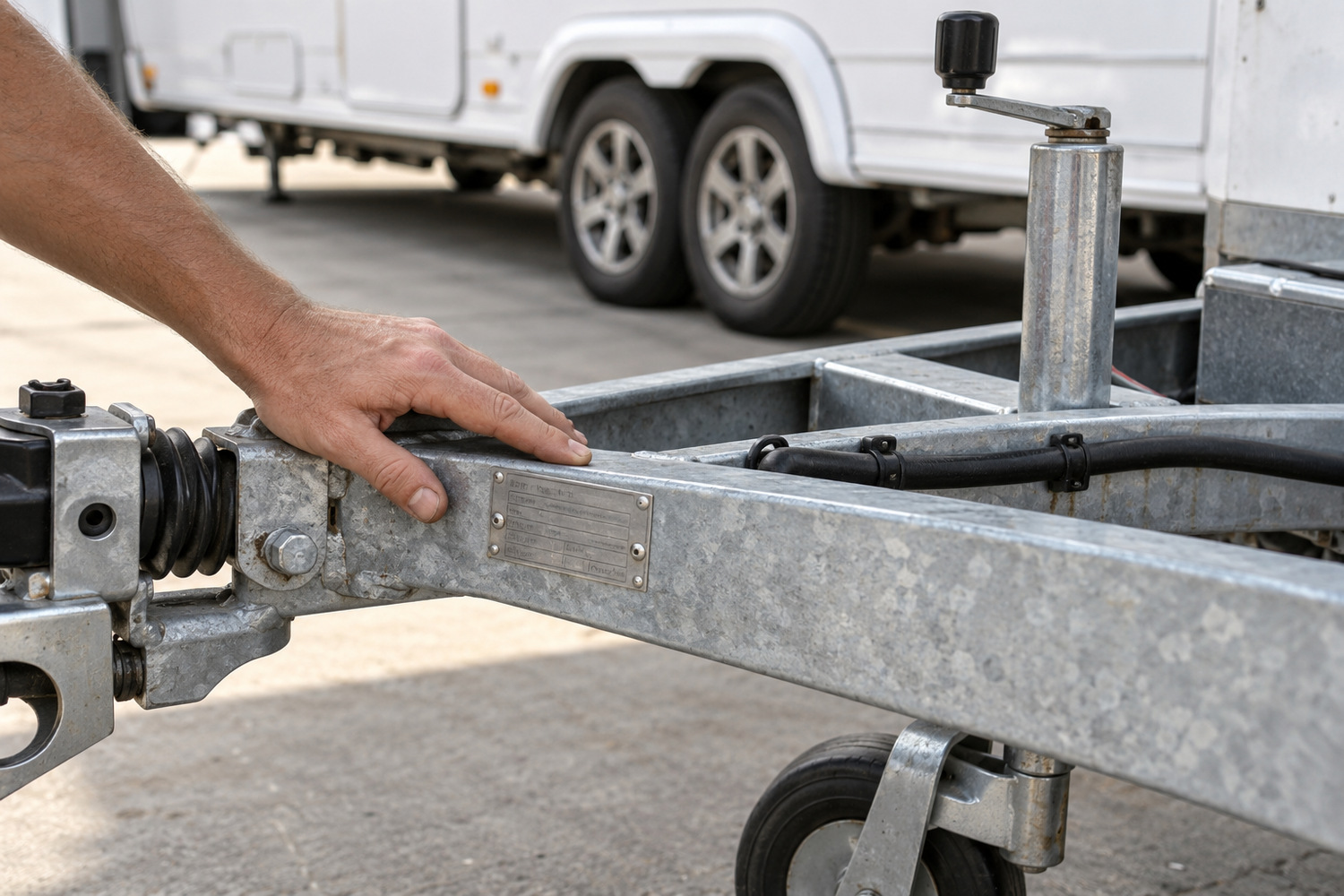
Three weight bands decide it. The plate tells you which one you are in.
GTM (gross trailer mass) is the weight carried by the trailer’s own axles when it is loaded and hitched up. ATM (aggregate trailer mass) is the whole loaded trailer, including the part pressing down on the towball. GTM is the lower number, and GTM is the one the brake rule uses. Both are usually stamped on the compliance plate, the small metal plate on the drawbar or A-frame.
The bands sit in the vehicle standards that apply in Victoria, in the Road Safety (Vehicles) Regulations 2021. Over 750 kilograms GTM, a trailer must have brakes on at least one wheel at each end of one or more axles. Over 2 tonnes GTM, the braking system has to let the driver work the brakes from a normal driving position. The brakes also have to come on by themselves if the trailer breaks away.
Plenty of trailers need nothing at all, and that rarely gets said out loud. A box trailer or a small boat trailer plated under 750 kilograms GTM needs no brakes, no controller and no breakaway unit. Read the plate before you spend anything. It is the only thing that settles the band.
The rule does not name electric brakes. It asks for brakes the driver can work from the driving position. Over 2 tonnes that normally means an electric system with a controller in the cab. Between 750 kilograms and 2 tonnes nobody has to be able to work the brakes from the driver’s seat. That is why an over-run coupling still does the job in that band. It pushes the trailer’s brakes on mechanically as the trailer runs up against the tow vehicle.
The last column is a guide to what tends to sit where, not a weight to rely on.
| GTM on the trailer’s plate | What the trailer needs | What the tow vehicle needs | Trailers often in this band |
|---|---|---|---|
| Up to 750 kg | No brakes required | Nothing extra | Box trailers and small boat trailers |
| Over 750 kg, up to 2 tonnes | Brakes on at least one wheel at each end of an axle | Nothing, unless the trailer’s brakes are electric | Larger box, boat and plant trailers, small campers |
| Over 2 tonnes | Brakes the driver can work from the driving position, and a breakaway system | A brake controller wired in | Caravans, car floats, tandem plant trailers |
What does a brake controller do, and why don’t trailer brakes work without one?
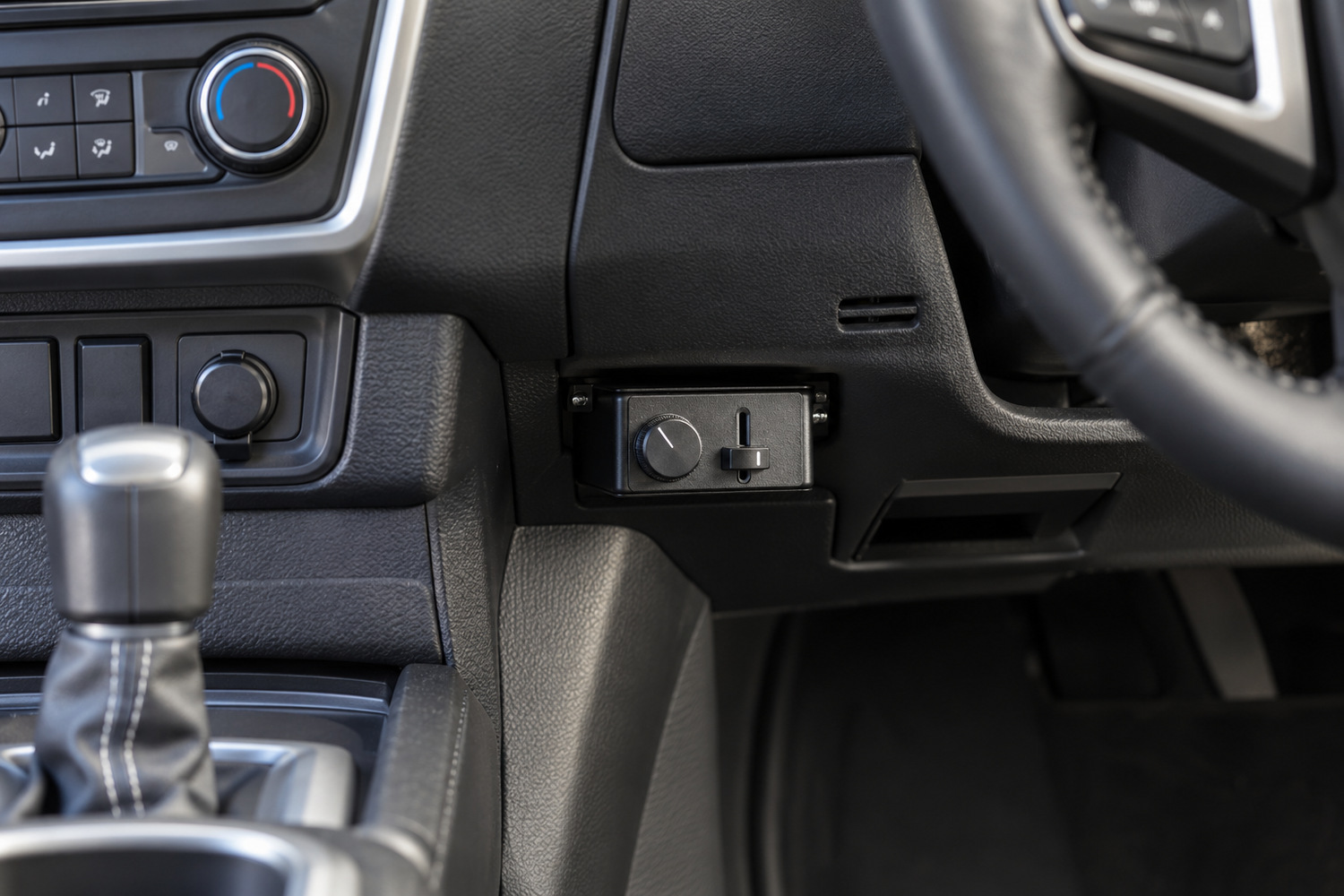
A brake controller is the box, usually fitted under the dash, that tells the trailer’s electric brakes how hard to work.
Electric trailer brakes decide nothing for themselves. They wait for a signal from the tow vehicle. With no controller fitted, nothing sends that signal, so a trailer with electric brakes is braked in name only. That catches people out after buying a braked trailer and towing it home behind a vehicle with nothing wired in.
A proportional controller reads how hard the tow vehicle is slowing. It sends a matching amount of braking back to the trailer. Light braking gives light trailer braking, and a hard stop gives more. That is what makes it feel smooth on a long run.
A user-controlled unit applies the level the driver sets on a dial. It is the same amount every time, whatever the tow vehicle is doing. It costs less and it works, but it is only as good as the number left on the dial.
What has to happen to the ute?
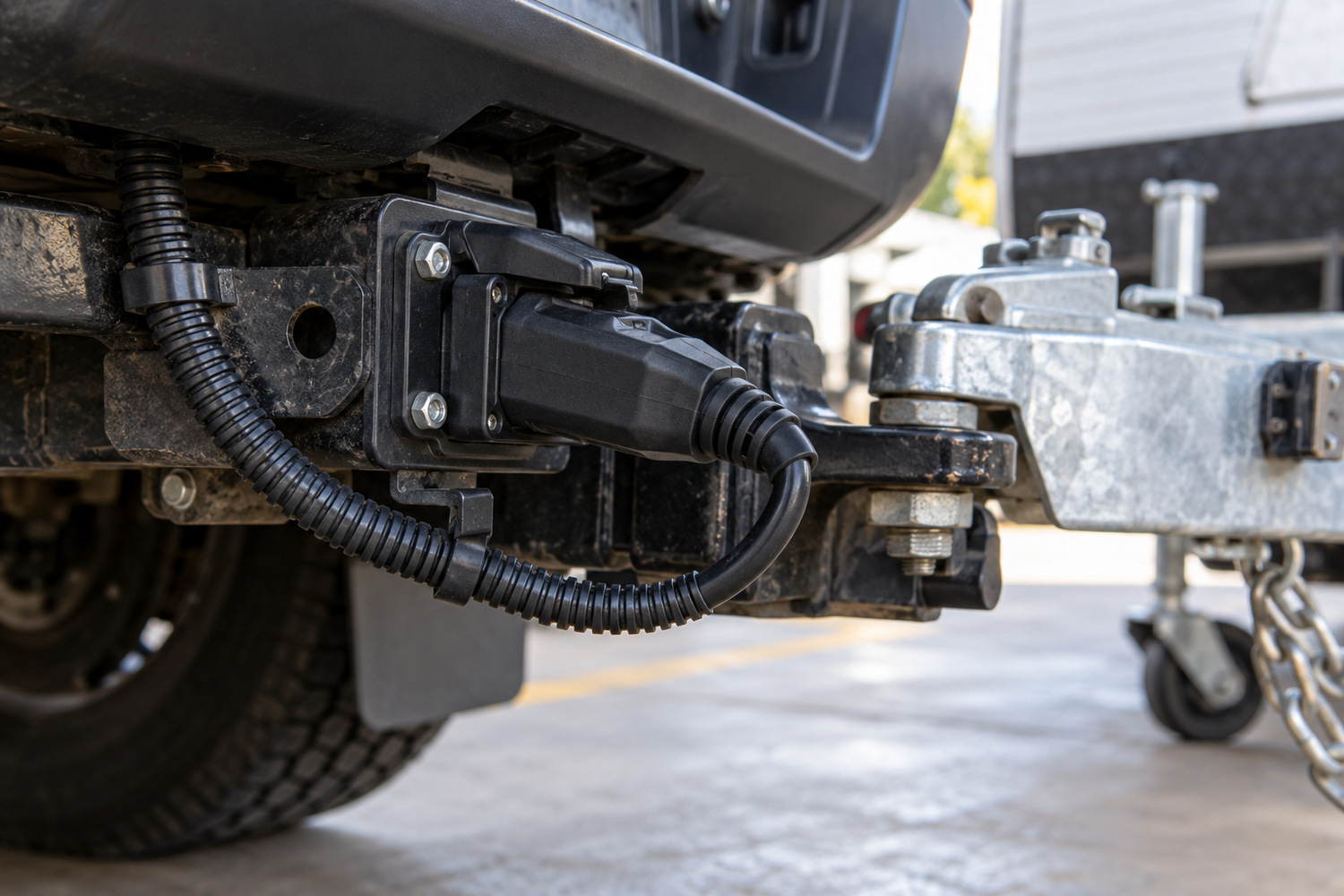
The trailer end is only half the job. The controller has to be wired into the tow vehicle.
The controller needs three things: a heavy feed from the battery, a connection to the vehicle’s brake signal, and a line out to the trailer plug. The plug has to match the socket on the tow bar. It also has to carry the brake circuit, not just the lights.
Incorrect trailer wiring can damage a vehicle’s control modules. On a late model ute the brake lights and the brake signal run through modules that talk to each other over a data network. Power taken straight off a wire in the loom can upset them. Vehicle-specific wiring kits are made for that reason, and they plug into the vehicle’s own connectors instead of cutting into the loom.
Sometimes the tow vehicle is the limit rather than the trailer. That is a separate question, and whether a GVM upgrade or a suspension upgrade comes first is covered on its own.
Do you need a breakaway system on your trailer?
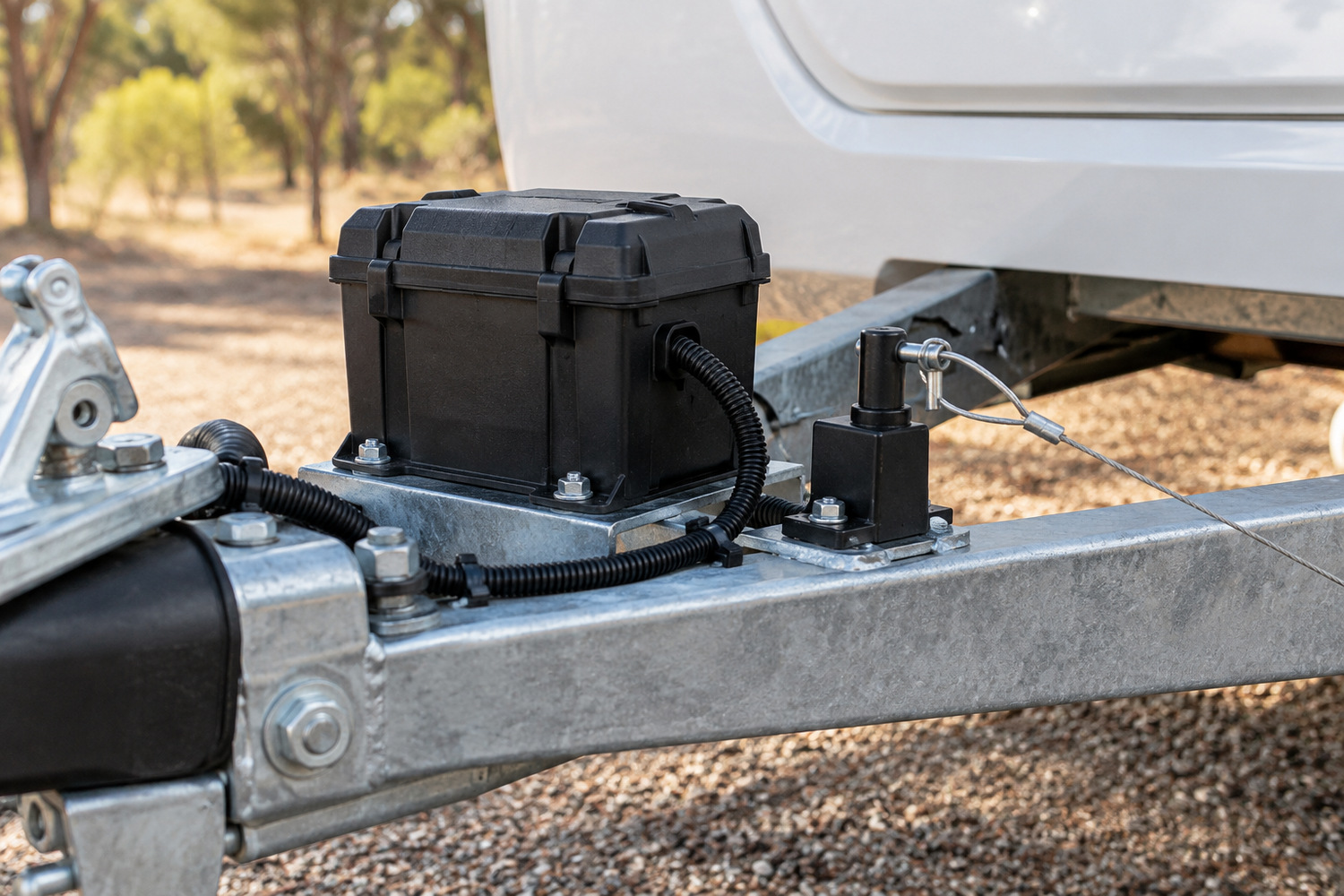
Over 2 tonnes GTM, yes. A breakaway system is a small unit on the trailer’s A-frame with its own battery. It is wired so the trailer’s brakes come on by themselves if the trailer separates from the tow vehicle.
The rule is specific about what it must do. The brakes must come on automatically and quickly after a break-away, stay on for at least 15 minutes, and hold the trailer on a 12 per cent grade.
The 15 minutes is the part owners do not expect, and the battery is what does that work. A unit with a flat battery looks compliant and does nothing. Nothing about the trailer feels different until the day it matters, which is why it gets overlooked.
What to check before you tow anything heavy
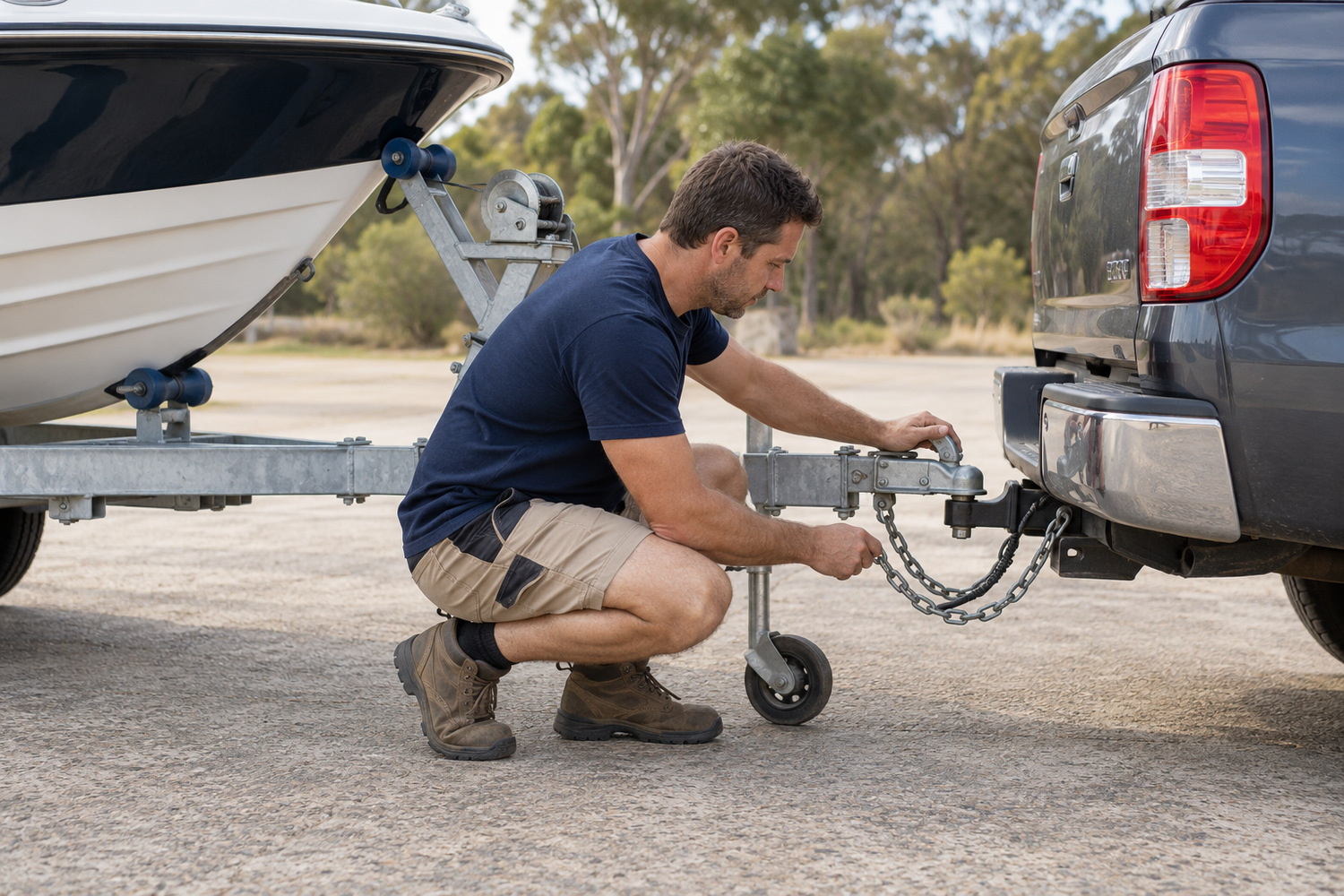
Five checks cover most of it, and none takes long.
Towing out of the Latrobe Valley, those checks matter more than they read on paper. A float towed down to the lakes is a long way from help on the day. So is plant on a tandem trailer out to a farm job on gravel.
- The plate weights. Read both numbers, then work out which band the GTM puts you in.
- The plug and socket. They have to match, latch properly and be clean, because the brake circuit runs through them.
- The controller setting. Set it for today’s load, not the last trip’s.
- The breakaway battery. Check it holds charge before the trip, not after.
- The wiring. Ask whether the last job used a vehicle-specific harness or a splice into the loom.
Frequently asked questions
What weight trailer needs brakes?
Over 750 kilograms GTM a trailer must have brakes on at least one axle. Over 2 tonnes GTM they also have to be brakes the driver can work from the driving position. Under 750 kilograms GTM, none are required.
Do you need a brake controller to tow a caravan?
It depends on the van’s GTM, not on it being a caravan. Over 2 tonnes GTM something in the tow vehicle has to let the driver apply the trailer’s brakes. On an electric system that is a controller.
What is the difference between ATM and GTM?
ATM counts the whole loaded trailer, including the weight sitting on the towball. GTM leaves that weight out and counts only what the trailer’s axles carry. The braking requirement is written against GTM, the smaller of the two.
Can you tow a braked trailer without a controller fitted?
Electric brakes with nothing to command them stay off, so the trailer is braked on paper rather than on the road. Over 2 tonnes GTM that also falls short of the requirement for driver-operated brakes.
Does a breakaway system need its own battery?
Yes, because it has to work when the trailer is no longer connected to anything. The rule asks for the brakes to stay on for at least 15 minutes after a break-away, and the battery holds them there. A flat one leaves the system unable to do its job.
Getting the tow vehicle end sorted
If the trailer is over 2 tonnes GTM and nothing in the cab can work its brakes, the controller and the wiring are the next job. Lloyd St Automotive takes on brake controllers and trailer wiring as part of its auto electrical work. An existing setup in the vehicle can be checked before a long tow. If you are not sure what the tow vehicle weighs, a complete vehicle tow and load assessment is $75, with a report on its weights and mechanical situation.